
The short answer
FLUX 3 Max pricing for a product-shot test starts with generated video seconds; divide actual charges by the shots your team approves. Resolution changes the rate, and a completed clip rejected in brand review still adds to the test cost. I have the documentation, not a finished test; the approval example below is illustrative.
What Does FLUX 3 Max Charge For?
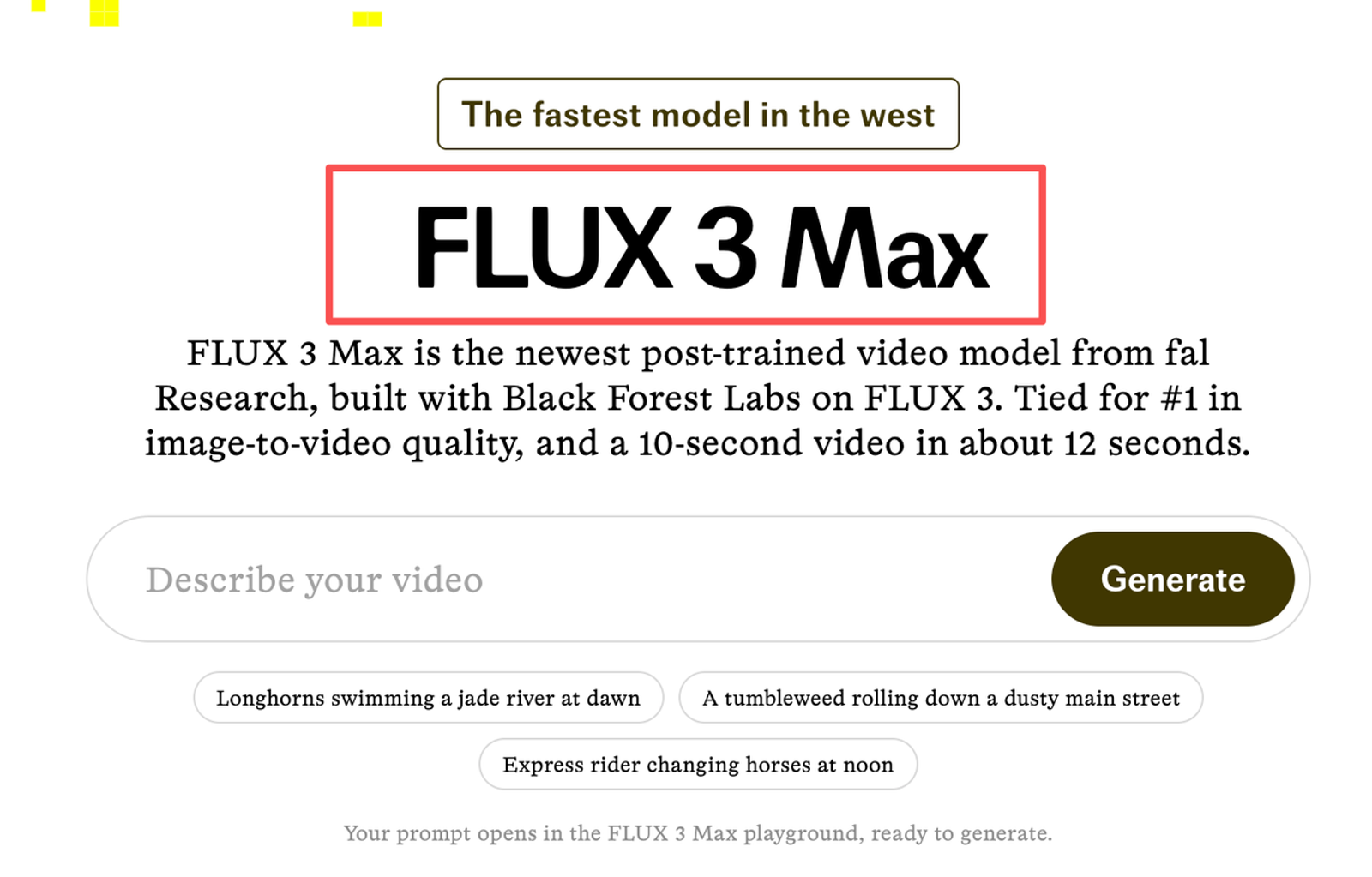
fal charges for generated seconds at the selected 720p or 1080p rate. Its FLUX 3 Max image-to-video endpoint accepts an image and motion prompt for a 5–20-second clip. This article budgets that route for one authorized product still. Text-to-video and keyframes have separate endpoints; record the one actually used.
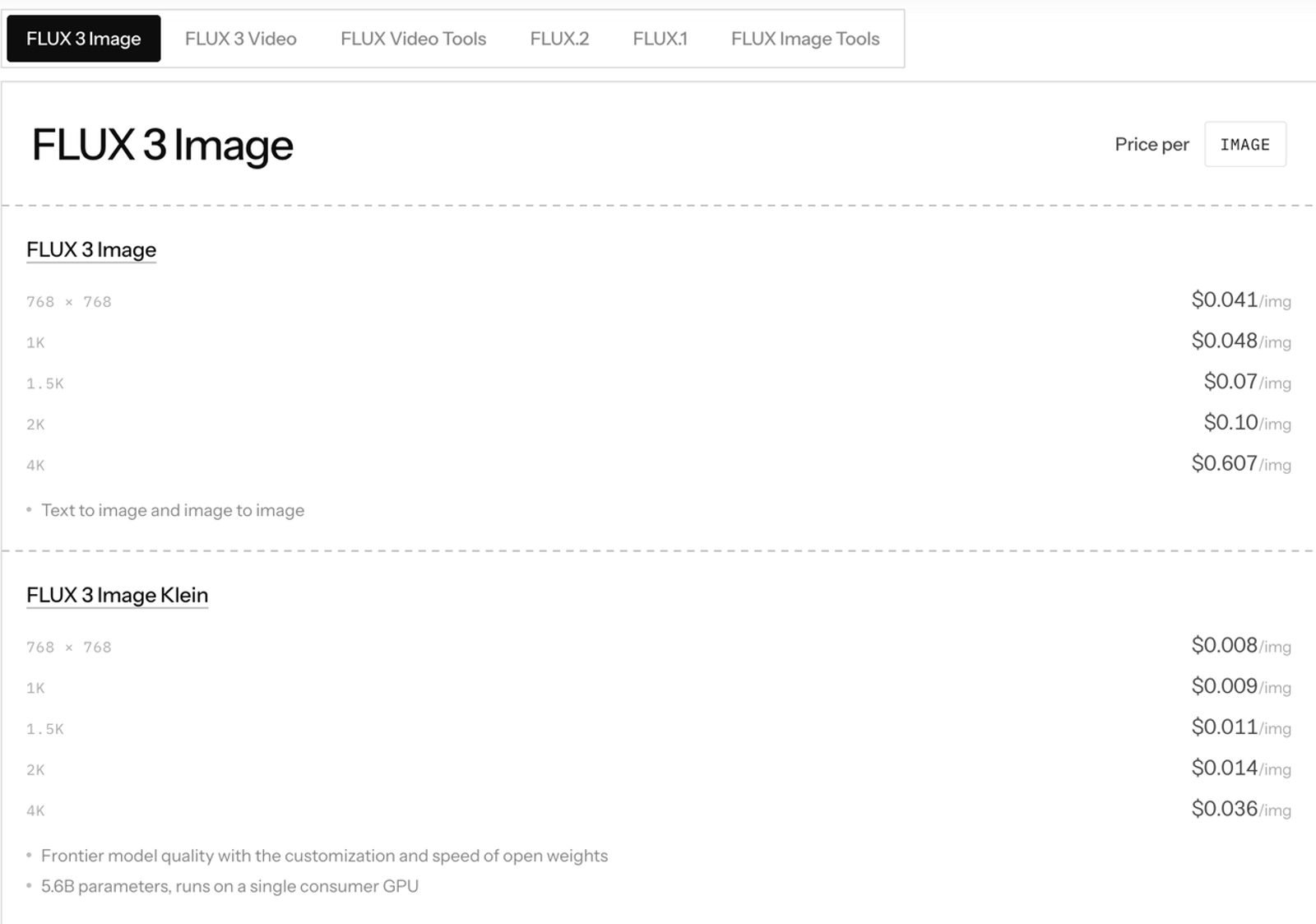
On October 27, fal quoted a promotion through November 7: $0.0425 per second at 720p and $0.0725 at 1080p. The page lists $0.17 and $0.29 per second after that date. These are dated quotes, not future guarantees. Recheck the selected endpoint and your account before generating; for work after the deadline, plan against the listed rate unless fal confirms a different one.
Billing is based on output duration, not queue time. The quoted rate does not cover editing, licensed assets, or human review, so it cannot by itself describe the cost of a publishable ad.
Estimate a One-Shot Ad Test Budget
Set one approved product image, camera move, target ratio, and maximum number of paid attempts. Keeping the brief fixed makes a revision identifiable; changing the product, motion, and crop together does not tell the team which change helped.
Output Seconds and Resolution
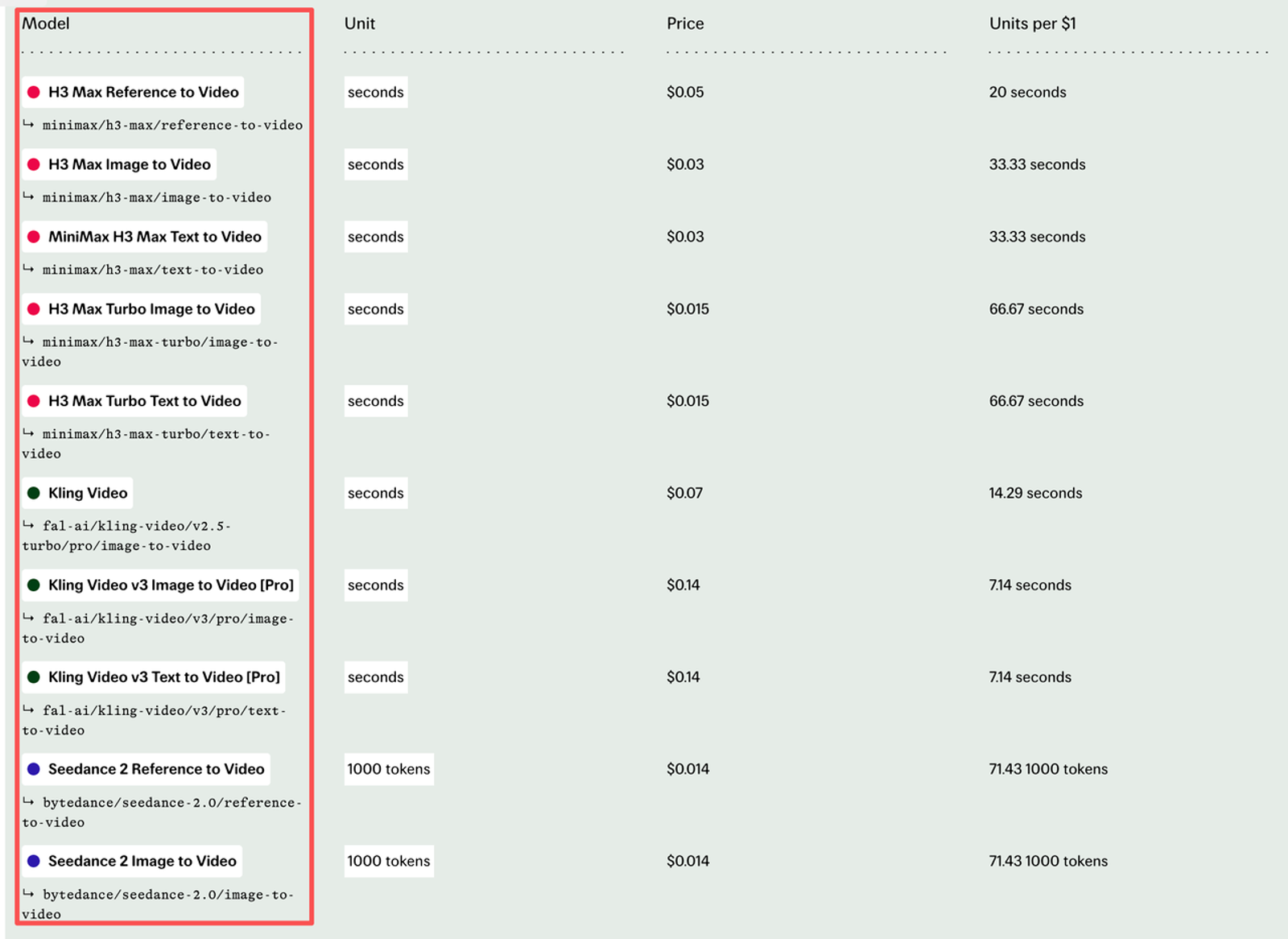
For one setting, planned generation spend = seconds per clip × planned paid clips × current rate per second. Calculate each resolution separately and add the results. A FLUX 3 Max price per second is useful only with its endpoint, resolution, and quote date.
Suppose a team buys two eight-second 720p trials, then one eight-second 1080p attempt, and approves only the last. If all three runs fall under the same price schedule, the 24 generated seconds cost (16 × $0.0425) + (8 × $0.0725) = $1.26 at the quoted promotional rates, or (16 × $0.17) + (8 × $0.29) = $5.04 at the listed rates. These are planning calculations, not observed charges or an FLUX 3 Max approval rate.
A 720p trial may reveal framing problems cheaply, but generating at 1080p is another request and may produce a different shot. If the destination needs 1080p, reserve time and budget to review that output rather than treating the 720p file as a guaranteed final.
Failed Runs and Revisions
Separate technical errors from completed clips rejected by the brand. fal’s Model API billing explanation says requests ending in a 5xx error are not charged. That does not establish the treatment of every error, and a completed clip with a distorted label is a creative reject, not a server failure. Check the request ID and credit deduction before classifying either one.
Treat video generation retries that produce another charged clip as new attempts. If the logo changes, try one smaller camera move; if the defect persists, consider compositing the approved packshot instead of buying indefinite rerenders. This is a proposed stop rule, not a measured failure rate.
Calculate Cost per Approved Clip
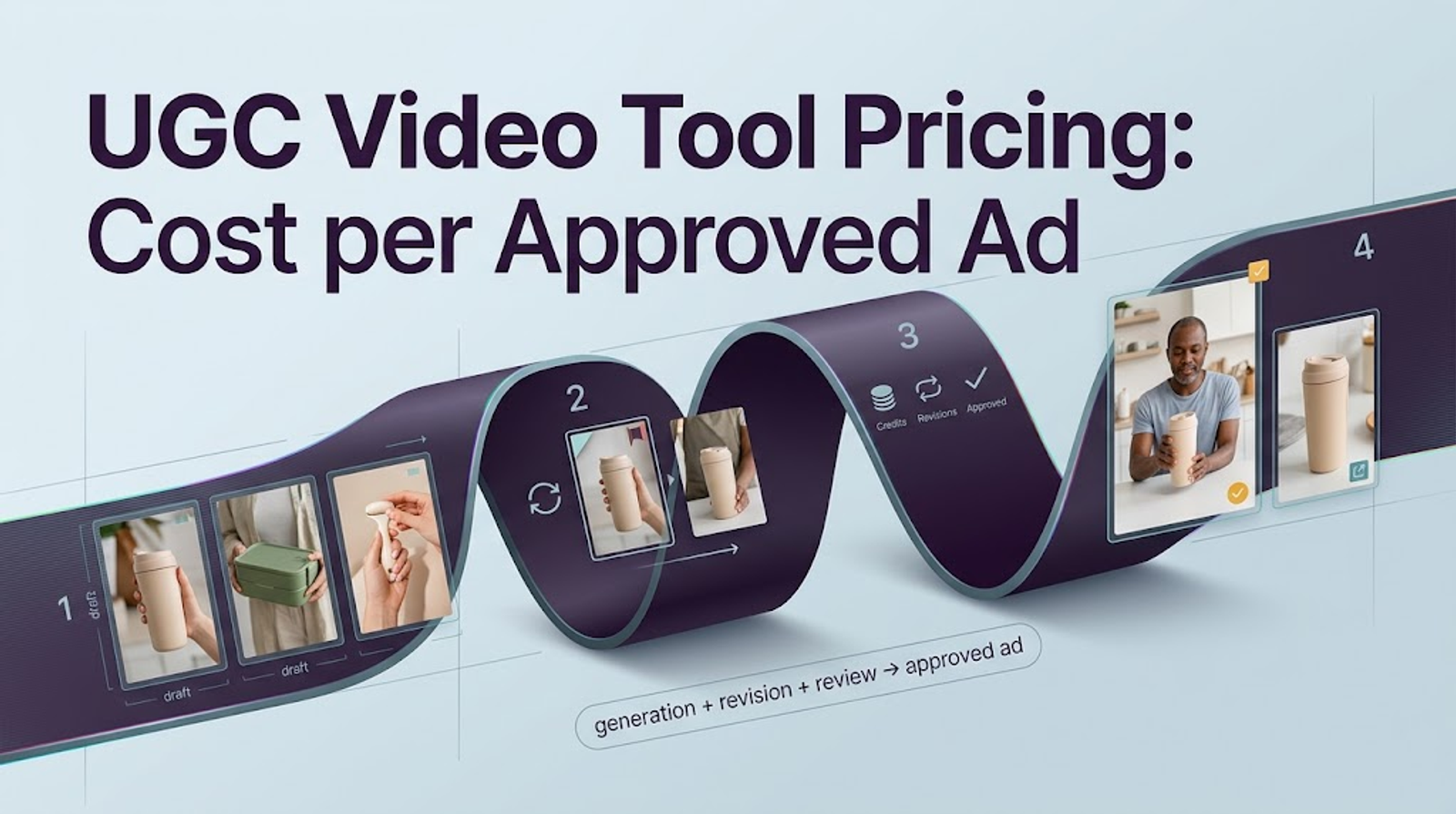
Use generation cost per approved clip = actual generation charges ÷ approved clips. In the illustrative mixed-resolution test, one approval bears the full $1.26 promotional or $5.04 listed-rate spend. Approval means the real SKU, claim, packaging, and intended crop pass review. If nothing passes, report the spending and rejection reasons; a cost per approved clip is then undefined.
For production planning, use a second measure: fully loaded cost per approved clip = (generation charges + review labor cost + editing cost + licensed-asset cost) ÷ approved clips. Convert reviewer time to a labor cost before adding it to currency charges. Keep this measure separate from fal’s bill. The next edit is part of the cost. A low generation rate loses its advantage if every label repair needs another compositing and approval pass.
Keep one ledger with the source image, endpoint, settings, quote date, request ID, deducted amount, review outcome, editing time, and final file. Once run, the test gives you a paid-attempts-per-approval ratio for that SKU and brief. It is not a universal benchmark: a dense label and an unbranded object pose different approval problems.
What Should You Check Before Paying?
Check the destination before selecting clip length. Google Ads’ video specifications vary by placement; a five-second generated shot may be only part of the delivered asset. Confirm image rights, the SKU and claim, required label readability, and whether a minor defect can be edited without regeneration. I would check those at the intended display size before I hit export.
Check promotional eligibility, taxes, currency conversion, and credit expiry before topping up. The fal terms say purchased credits expire after 365 days and free or promotional credits after 90. A prepaid balance is not proof of an API-level hard cap: authorize a fixed number of output seconds, then pause for a human decision before the next request.
Conclusion
The posted rate is only a starting point for a FLUX 3 Max ad budget. Limit the first test to a defined shot and number of seconds; keep the charge and approval record; stop when further generations cost more than a controlled edit. That decision remains useful even when a good-looking first render cannot be published.
FAQ
- Is there a FLUX 3 Max free trial on fal?
- There is no public, universal FLUX 3 Max free allowance I can verify. The model page displays a “Try free in Sandbox” entry point, while the same page quotes per-second rates. Treat any account-specific promotional credit as a separate benefit; check the actual balance and charge shown before assuming the test costs zero.
- Does fal offer itemized invoices for FLUX 3 Max usage?
- I could not verify request-level invoice line items in fal’s public documentation. The terms describe credits and deductions, not invoice granularity. Ask for a sample invoice or usage export if finance needs to reconcile each job.
- Can a team set a spending cap for FLUX 3 Max?
- I could not verify a hard spending cap for direct FLUX 3 Max Model API calls in fal’s public documentation. Controls advertised for fal Agent should not be assumed to cover that API route. Enforce a maximum job count or duration in your own calling workflow, and confirm any account-level limit with fal before relying on it.
- Are FLUX 3 Max rates the same across providers?
- Do not assume so; I did not verify a matching FLUX 3 Max quote from another provider. A reseller may use credits or a plan, and fal’s promotion need not transfer. Black Forest Labs’ official FLUX 3 pricing describes its base model, not a guaranteed fal FLUX 3 Max rate. Compare the model, endpoint, resolution, billing unit, and checkout quote.
- Does a commercial license come with every FLUX 3 Max route?
- fal’s current image-to-video, text-to-video, and keyframes-to-video model cards each display “Commercial use.” That label does not create a blanket license across providers or clear rights to the brand’s input image, logo, people, or music. Check the selected route, fal’s terms, and the destination platform’s rules before publishing. This is general information, not legal advice.