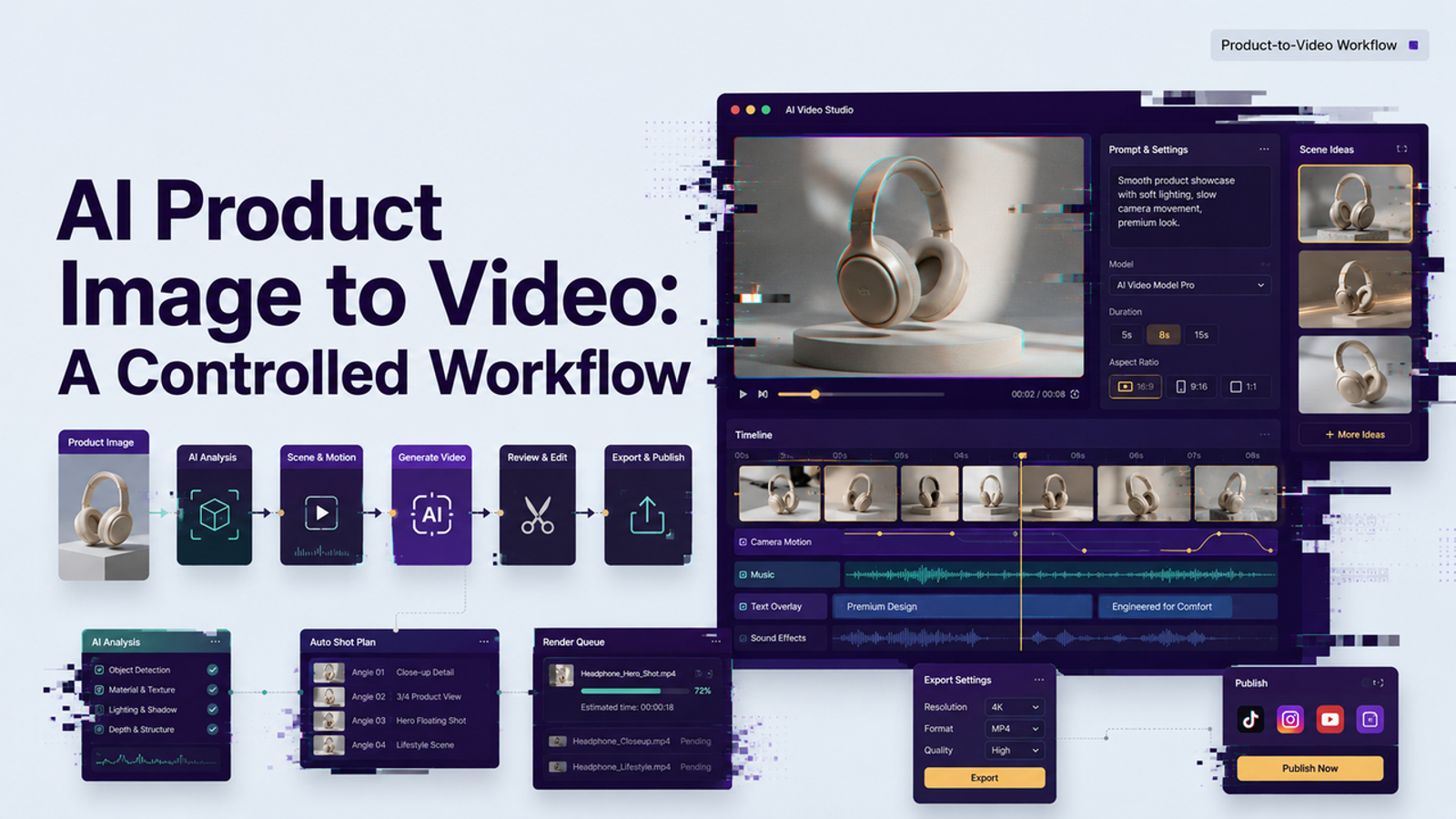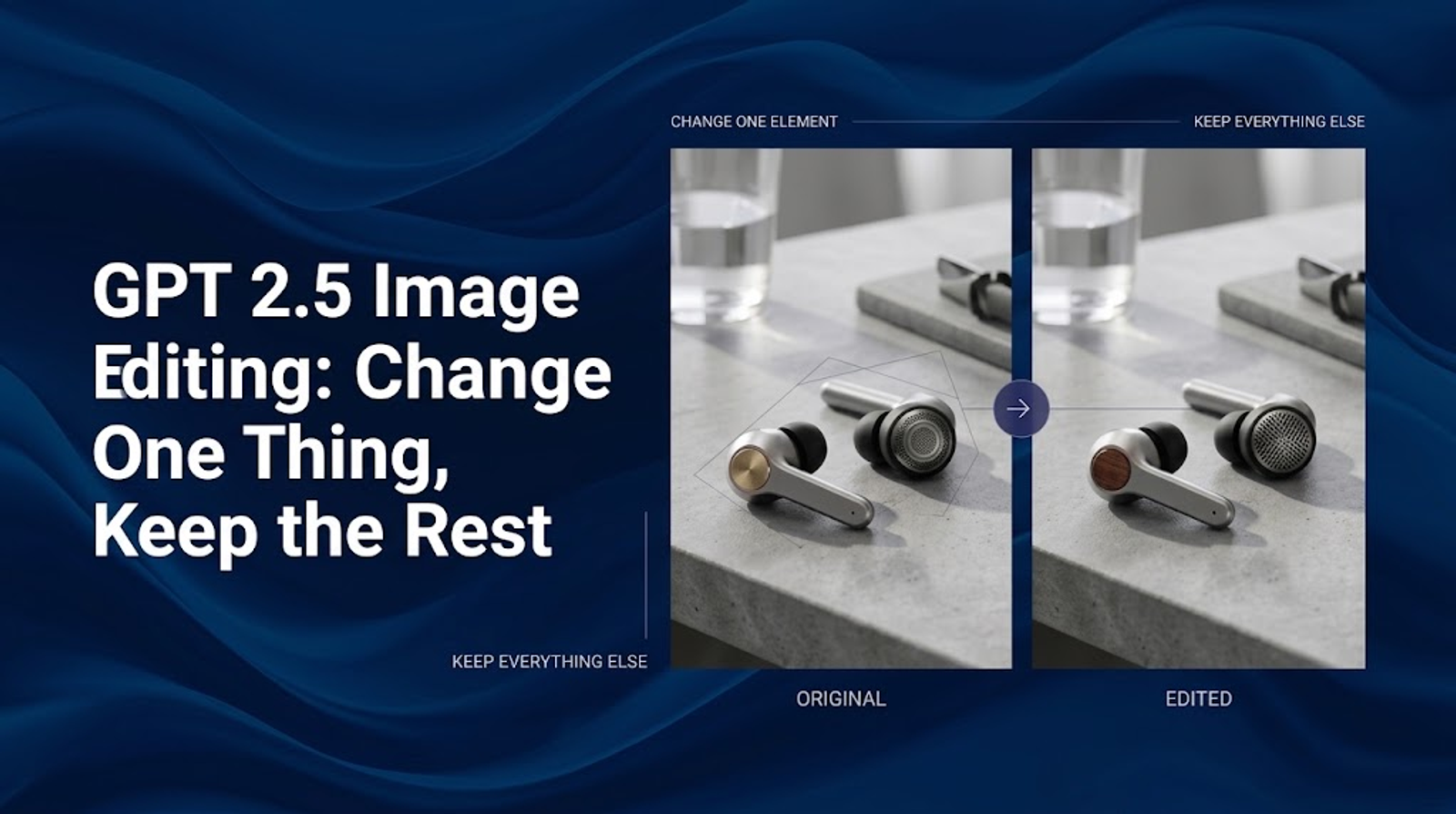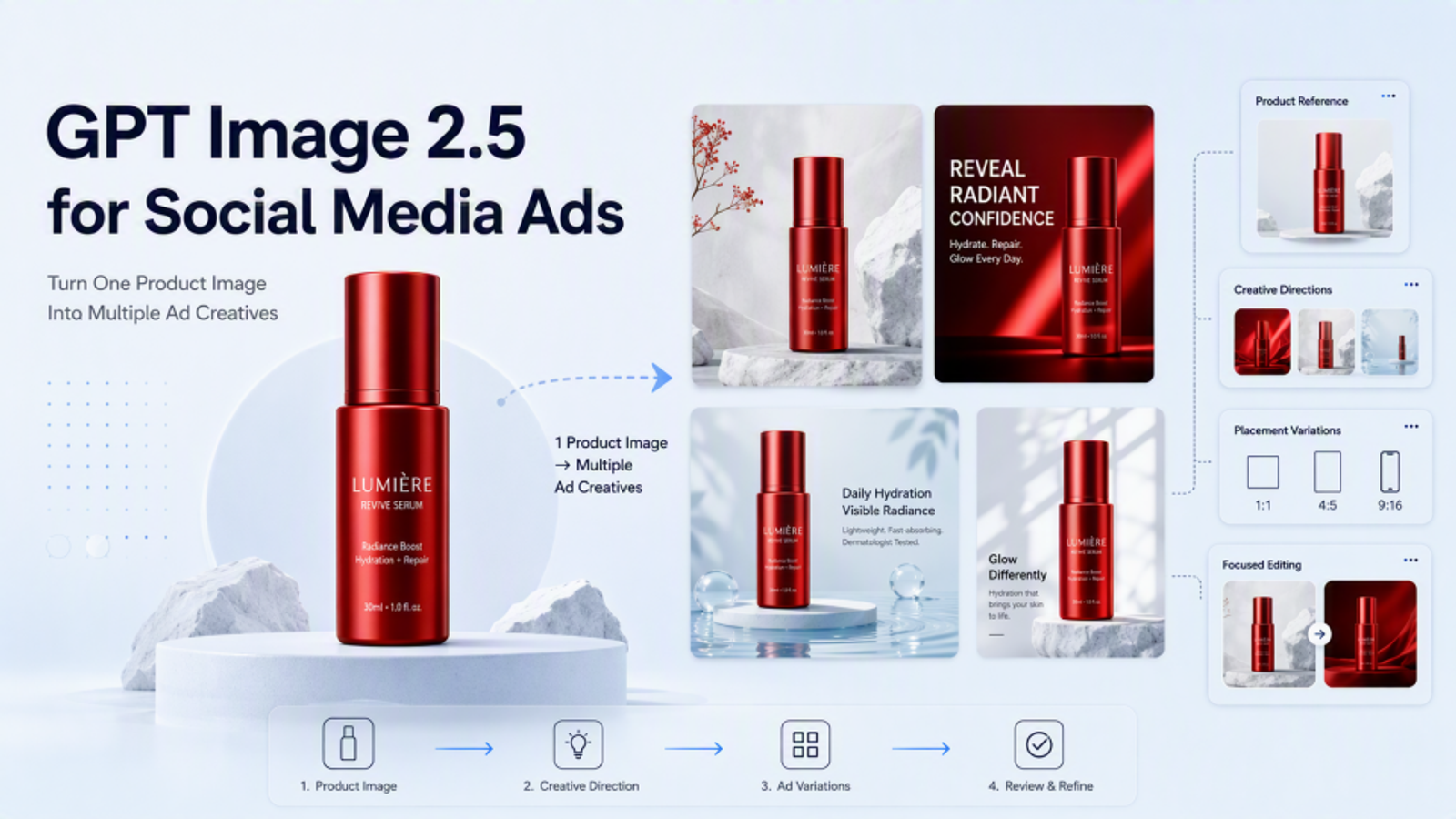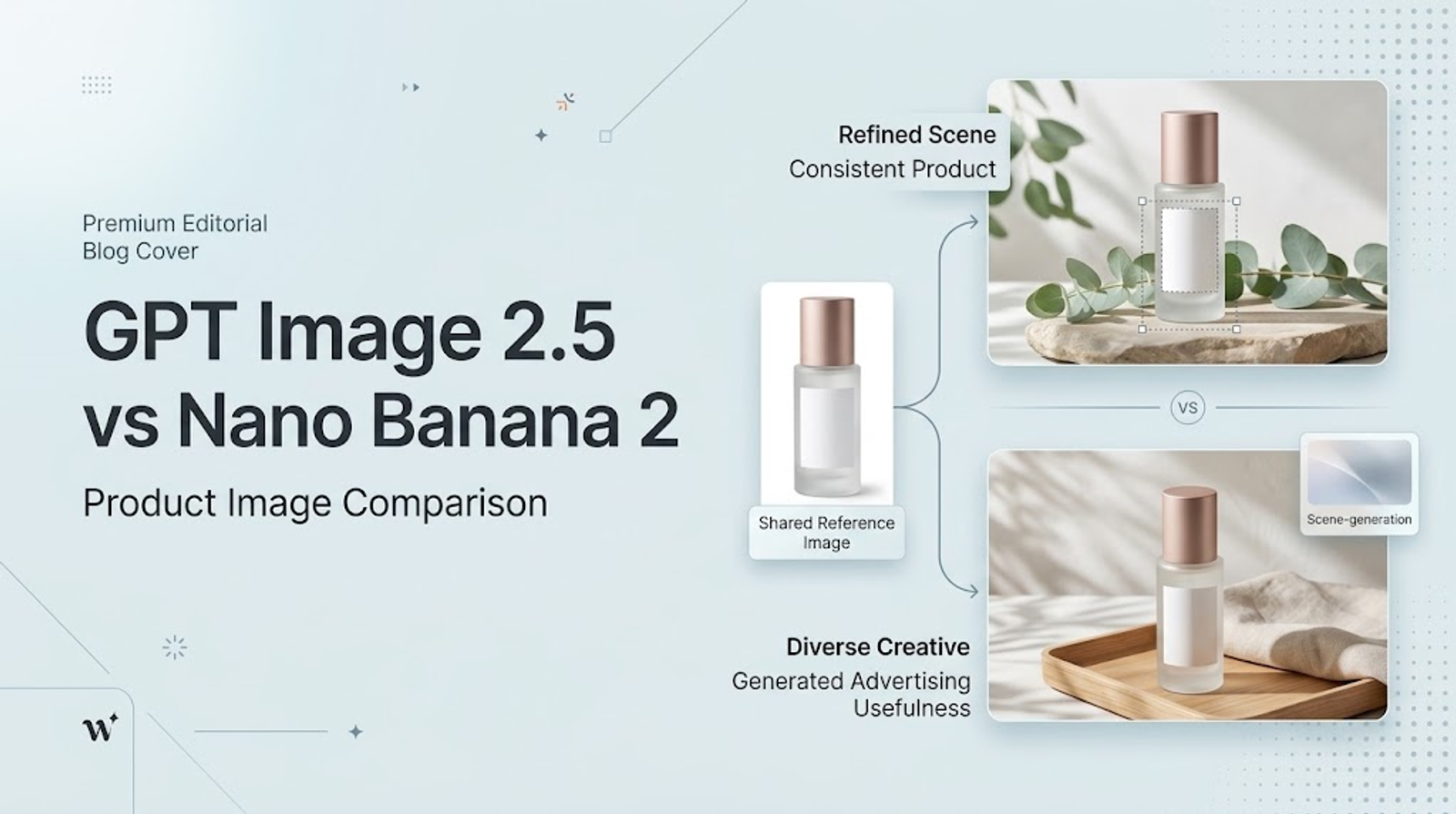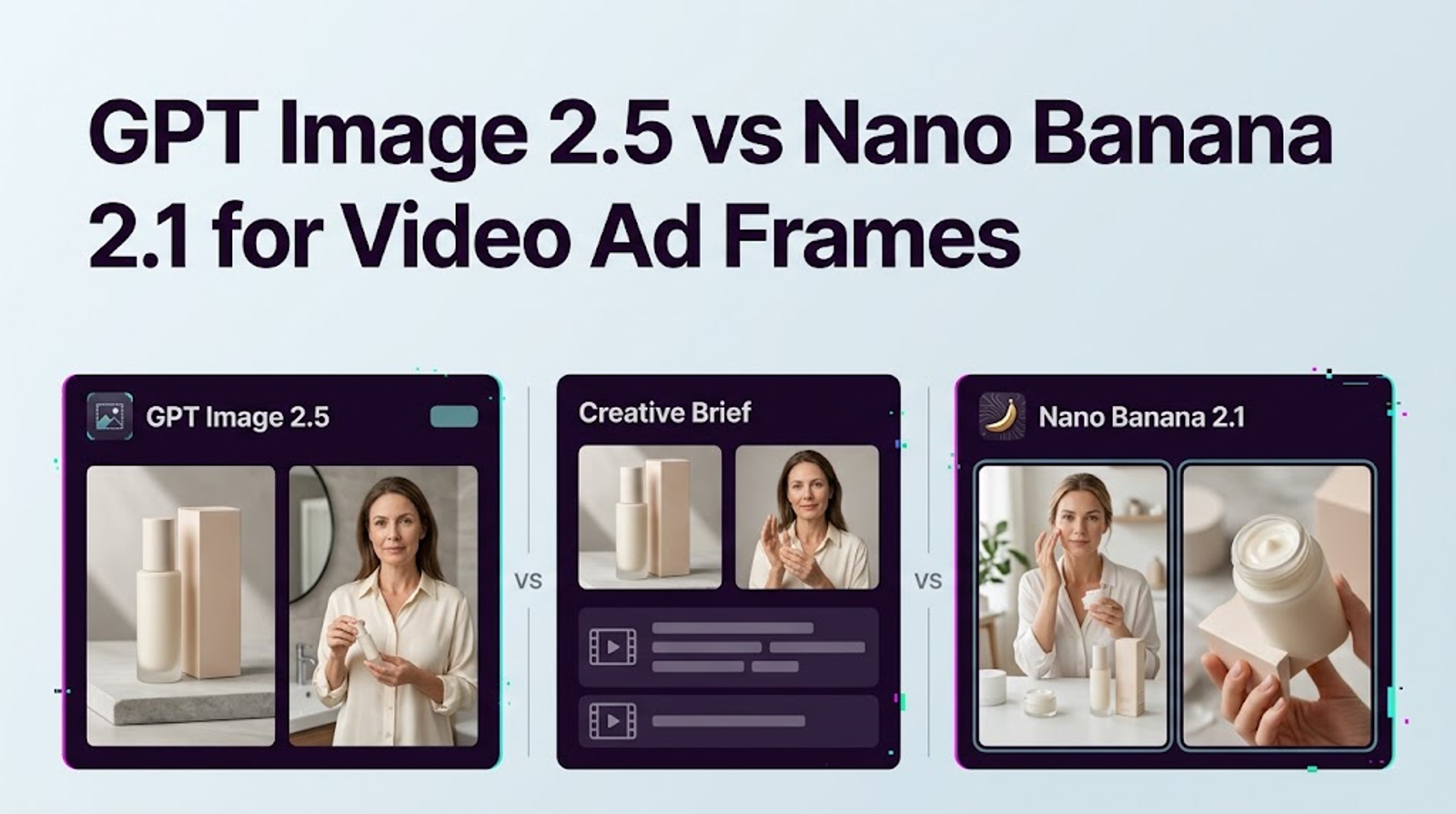
I tend to look at product photos with a phone screen in mind: where the product will sit, where the hook might go, and what viewers will notice first. A still has to work before the motion begins.
A convincing product image can still be a poor video ad frame. An altered label, blocked headline, or cropped pack can cost more to repair than the image saved in production. For growth teams deciding between GPT Image 2.5 and Nano Banana 2.1, I would compare one approved product reference and one ad brief, then choose the output that survives the video layout.
Which Model Fits a Video Ad Frame?
Choose the model whose frame preserves the product and survives copy, crop, and motion treatment. Reference fidelity is the first gate; A clean text zone may matter more than a beautiful background.
“GPT Image 2.5” covers two OpenAI API models: gpt-image-2.5-flare and gpt-image-2.5-sunburst. OpenAI’s image generation guide describes Flare as the everyday option and Sunburst as the more precise editing option. Google lists gemini-nano-banana-2.1 as the stable Nano Banana 2.1 model. Record the exact OpenAI variant; The family name is not a reproducible setting. These are image tools, so an attractive still does not prove that a downstream video workflow will preserve its labels.
Set Up One Fair Product Ad Brief
Start with one product photo the team is authorized to upload and a short, approved copy block. State the attributes that cannot drift, desired setting, and two delivery canvases. Give both services the same reference and creative instructions, while recording each API route, model ID, resolution, quality or thinking setting, and edit passes. Their controls differ, so those details matter.
Approved Product Reference and Exact Copy
Pick a reference showing the logo, label, cap, silhouette, material, and any legally relevant claims. Blown-out lettering makes scoring ambiguous. A reference sheet should distinguish fixed details from flexible ones: a silver cap or rewritten volume is a failure when the approved SKU has a red cap and a 250 ml label, however attractive the lighting.
Specify an approved headline, supporting line, and call to action in quotation marks, plus “no other text.” State where copy may sit and whether the editor will add the final typography. Generated lettering can scout a composition, but paid ads often need editable copy for localization, legal changes, and placement variations. A reliable blank zone may be more valuable than words baked into pixels.
Shared Output Size and Review Criteria
Request vertical and widescreen candidates from the same brief, then place the files on identical 1080 × 1920 and 1920 × 1080 review canvases. Log native dimensions too: OpenAI documents custom sizes within limits, while Google’s Nano Banana image guide lists aspect-ratio and resolution options for 2.1. “2K” need not mean the same pixel grid on both services.
Keep the same number of first attempts and define a revision budget in advance. Judge product fidelity, copy or blank-zone usability, both crops, and manual repair required. Those checks turn visual preference into a production decision without a false universal score.
Compare Both Models on the Same Brief
No matched outputs are attached to this article, so this is a review protocol, not a reported test. Vendor claims about fidelity or text rendering cannot tell us how either model handles a particular SKU. The useful comparison happens where a designer would accept or reject a file.
Product Detail Against the Reference
Inspect packaging at 100% zoom, then at delivery size. Compare cap shape, label placement, seams, color blocking, and proportions; look for invented claims, transposed numbers, and approximate logos. Check whether shadows and reflections ground the pack without changing its material. Attractive photography fails as an ad if it depicts a product customers cannot buy.
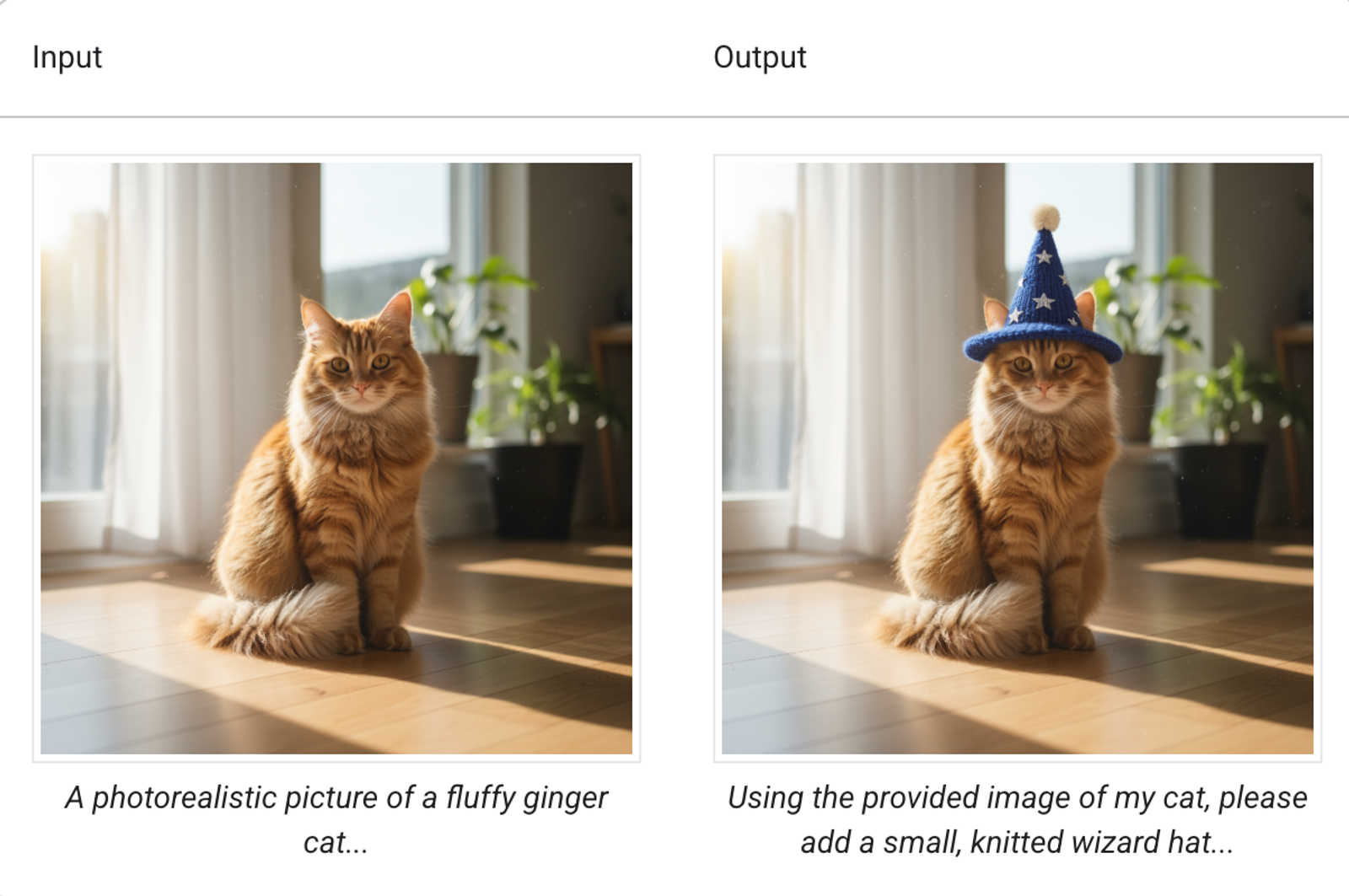
Treat changed regulated or purchase-critical attributes as a stop. For smaller errors, test one targeted edit with the same instruction in each service and save both versions. If fixing a label changes the pack shape, the review burden has moved. Compositing an approved product cutout into a generated scene may be safer than repeatedly redrawing detailed packaging.
I would ask a second reviewer to compare the candidate with the reference before seeing which model made it. That simple blind pass can catch a failure the person who wrote the prompt overlooks, especially when an image is visually persuasive. Record the reason for rejection in plain language—“logo letter changed” or “cap moved into crop”—so the next prompt or composite addresses an observable defect rather than a vague request to make the ad better.
Headline Space and On-Image Copy
Assess copy in two passes: check the generated words, punctuation, and hierarchy; then cover them and test the composition with human-set typography. A model can spell everything correctly yet fill every quiet area with props, leaving the editor no room. Text accuracy and layout usability are separate decisions.
A useful text zone needs contrast after grading, margin for platform overlays, and room for a subtle push-in. Check it after cropping, not only on the native image. If offers vary by market, keeping the call to action as a video layer avoids regenerating the frame for every revision. Overlay copy still cannot repair a fictional package label.
Crops for Vertical and Widescreen Video
A 16:9 composition may lose package detail when cropped to 9:16; a vertical portrait may force awkward wide-frame extension. Generate each ratio from the same reference and brief. If one image must serve both, test actual crops with captions, logo, and interface overlays. The pack face, brand cue, and action must remain legible at viewing speed.
Look for crop debt: edge placement requiring outpainting, a headline needing retypesetting, or shadows ending abruptly. Those repairs can matter more than slight differences in realism. Plan which layers may move and whether the product stays locked. Still-image specifications cannot establish video consistency. Keep the original alongside each crop: the C2PA group’s Content Credentials explainer distinguishes a signed record’s integrity from the truth of an ad claim, and export may alter metadata.
Choose a Frame for the Video Workflow
Reject altered product facts before comparing style. Among survivors, choose the file requiring the least risky work for both ratios. Dense packaging may call for an unchanged approved pack shot inside a generated scene; a simple object may benefit from a more integrated setting. These choices depend on the brief, not a model’s reputation.
For each surviving frame, I would write a short handoff note naming the exact model ID and what the editor must fix. Does the product match the approved reference? Can the headline be set cleanly without covering it? Do the vertical and widescreen crops retain the same selling point? An imperfect background may be easy to replace; a distorted logo or invented claim usually is not. This makes the choice legible to the designer and approver without pretending that four checks can be reduced to a single objective score.
Keep the native image, final crop, reference, prompt, model ID, settings, edits, and approval together. That project log connects the selected image to the video export, even if embedded metadata no longer survives. Your approval trail remains essential.
What the Comparison Cannot Prove
One brief cannot establish a winner across categories, languages, or campaign volumes. This article has no controlled sample for speed, cost per usable frame, or win rate. Listed prices also differ from the cost of approved creative after revisions and retouching.
Image quality does not establish ad effectiveness: the offer, hook, or audience may be wrong. Nor does an output establish permission to use a photograph, logo, likeness, or claim. Google’s Gemini API Additional Terms make developers responsible for use of generated content; that responsibility belongs in the production review, alongside source rights and destination ad policies. AI generation prepares candidates for human review; it does not approve the marketing message.
Conclusion
Choose the frame that tells the truth about the product and remains usable after copy, crops, and motion. Test GPT Image 2.5 and Nano Banana 2.1 on the same authorized brief, naming the OpenAI variant explicitly. Let the approved files and repair work decide. Until those files exist, a confident winner would disguise the real question: can this frame ship?