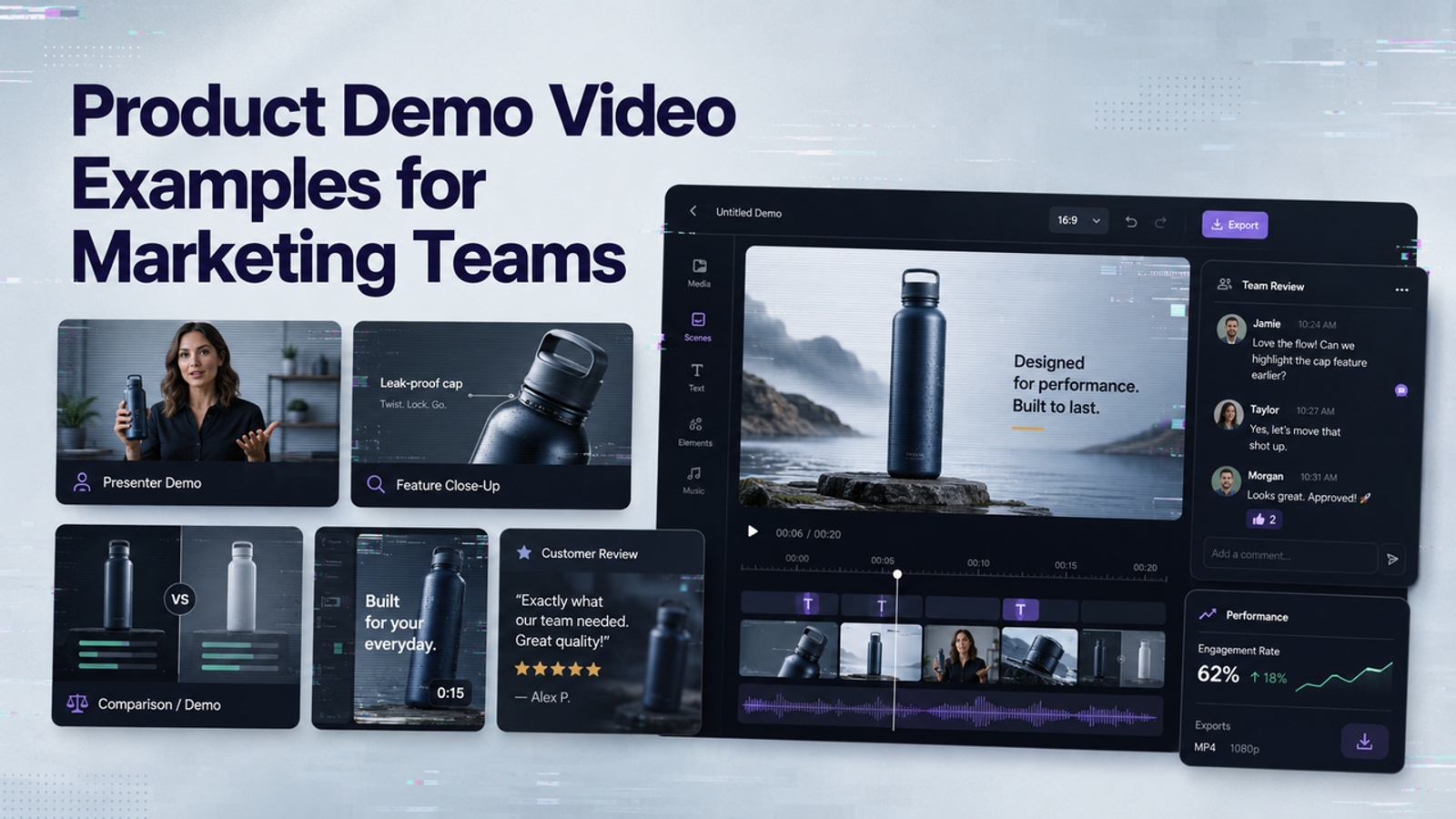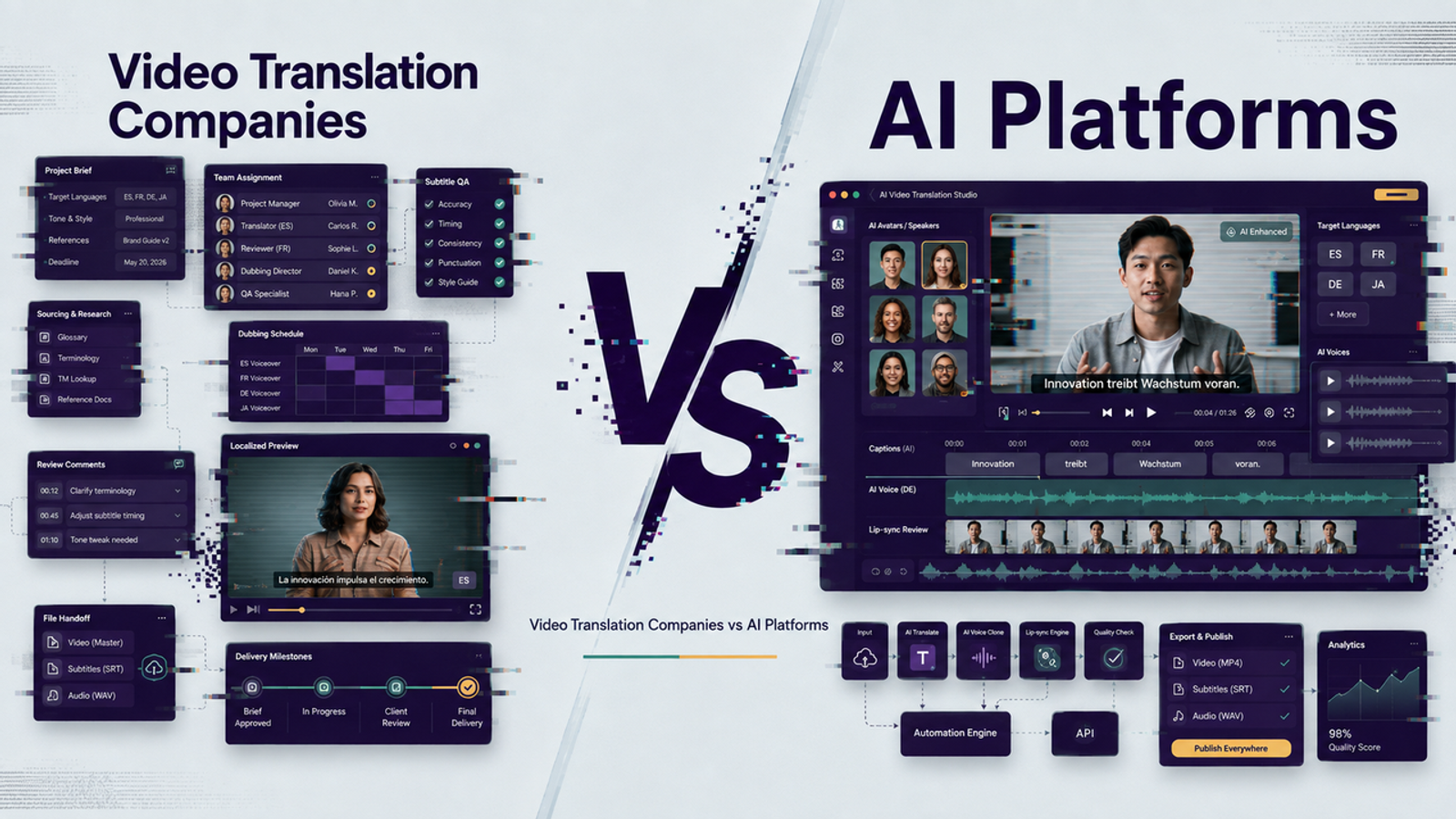
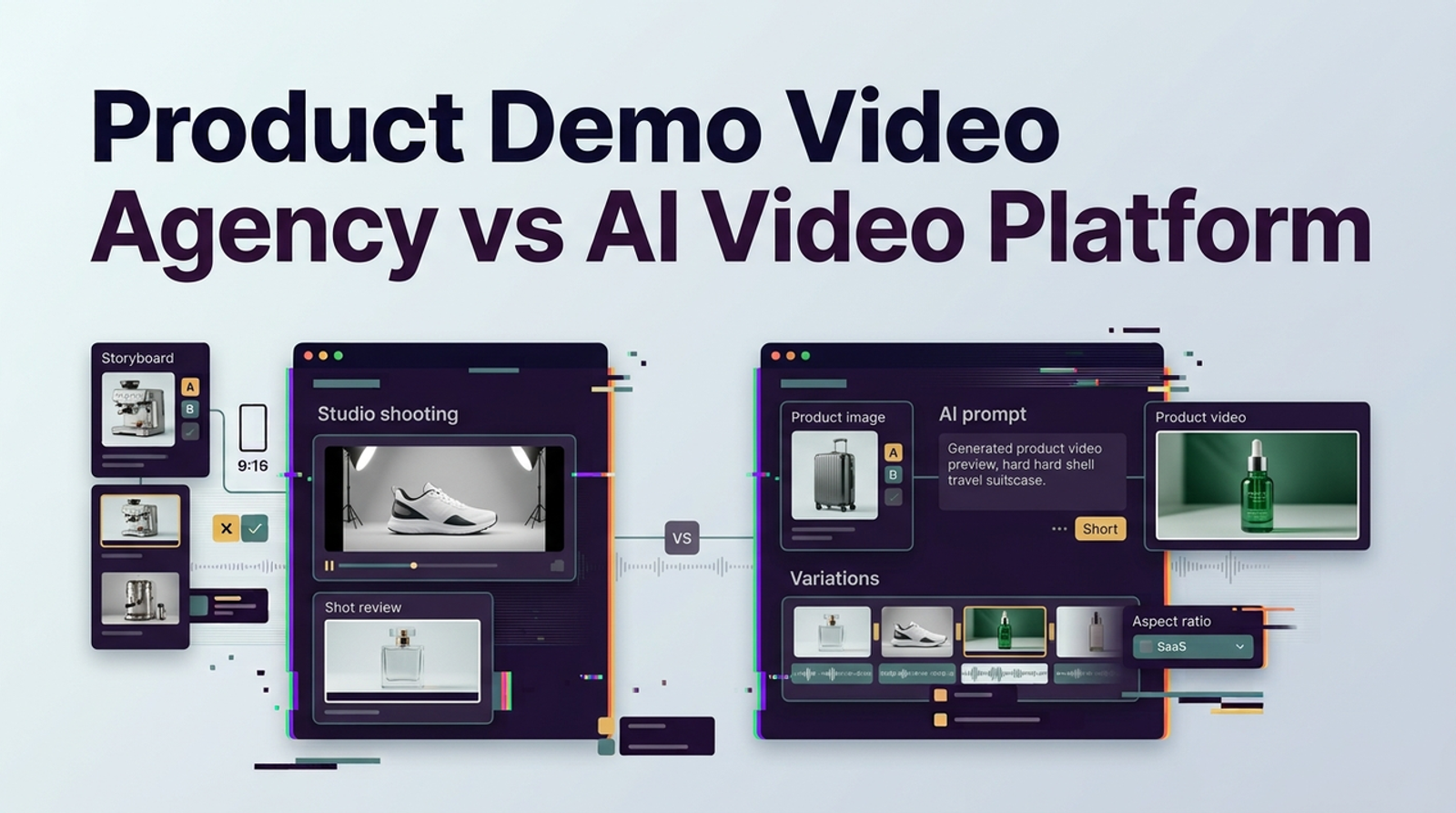
Hire a product demo video agency when you need a team to develop the story, produce the assets, and manage delivery. Consider an AI video platform when you already know what to show and have someone who can create, edit, and check the result. Frequent updates can suit either route; the deciding factor is who will do the work.
I’m Vela, and I would compare both options against the same brief and one realistic product change. That makes the trade-offs clearer than comparing a production quote with a software subscription.
Frame the Production Decision
Separate the help you need from the technology used. An agency may use AI, while an internal team may need only screen recording and conventional editing.
Define the Demo Type and Business Stakes
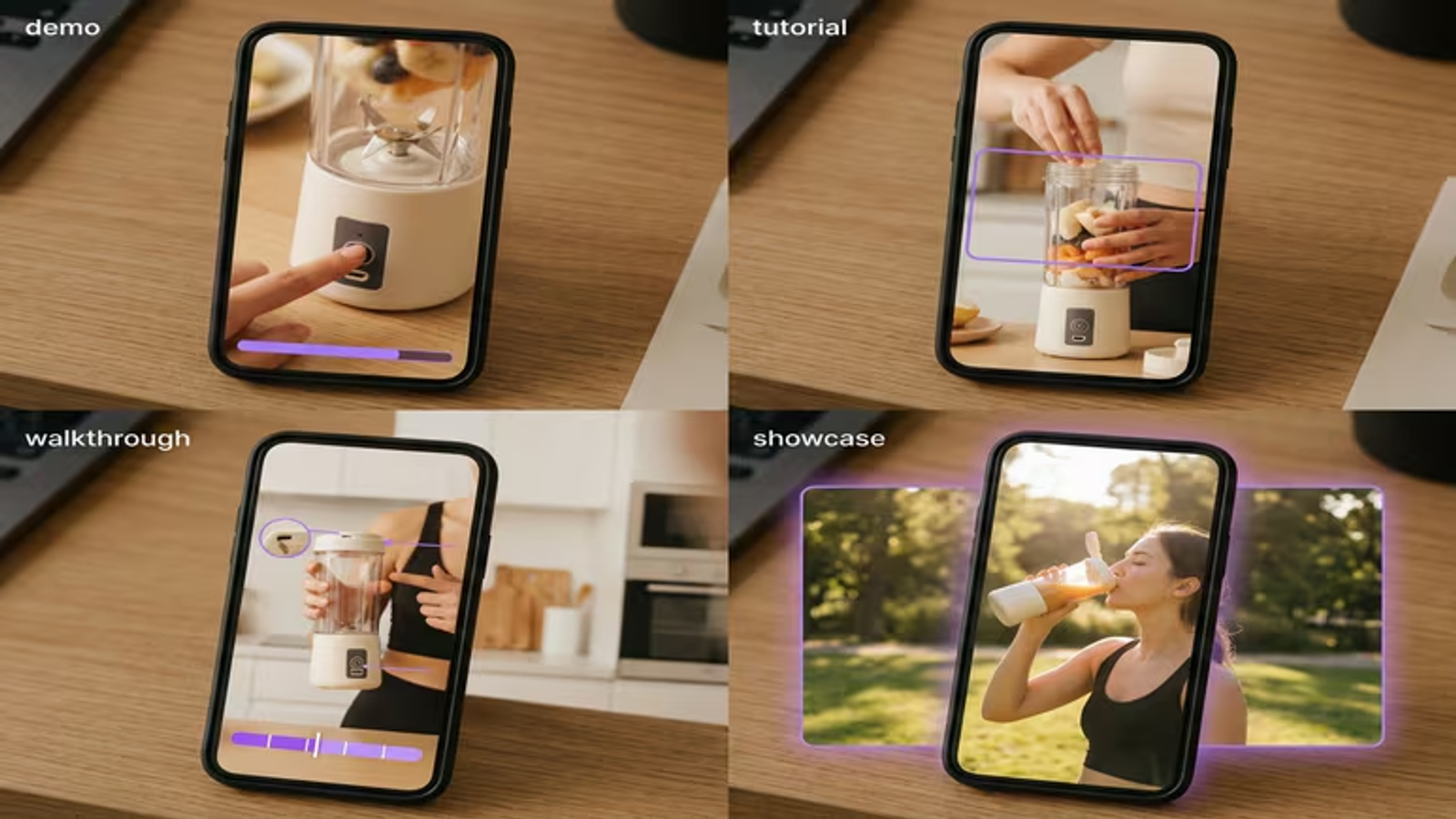
A software walkthrough needs accurate clicks and visible UI. A physical-product demonstration may need real footage showing setup, size, or handling. A launch film may need animation and a stronger narrative before viewers care about the workflow.
Name the audience, the decision they should make, and the evidence they need. Generated footage can illustrate an idea, but it cannot independently establish that a product performs as shown. If the promise depends on an actual operation or result, plan how to capture that evidence.
Separate One-Off Craft From Repeatable Output
A flagship film and a regularly updated demo library need different production arrangements. They do not necessarily need different suppliers.
Agencies may offer project work, retainers, or subscriptions. For an ongoing demo program, confirm whether the agreement covers routine updates as well as new videos.
Ask whether you need temporary specialist capacity, continuing production support, or tools for an existing internal operator. Volume alone does not answer that question.
What a Product Demo Video Agency Owns
Here, “owns” means responsibility for agreed production work. Copyright, source-file access, and reuse rights still depend on the contract.
Discovery, Creative Direction, and Production
A product demo production agency can help turn product knowledge into a buyer story: which problem to introduce, which workflow to show, and where explanation needs visible proof.
Before hiring, ask for work on a product with comparable complexity. Watch whether you understand the demonstrated action, then ask who wrote the script and built the UI scenes. A polished showreel is less useful than a relevant example the team can explain. Confirm whether those same specialists will work on your project.
Specialist Craft and Managed Delivery
Custom filming, UI animation, sound, narration, and finishing may require skills your team cannot maintain internally. An agency can coordinate those specialists if that work is included in its scope.
Get the deliverables, milestones, review rounds, and update arrangements in writing. Your team still supplies product access, accurate information, and consolidated feedback. Outsourcing production does not transfer approval of product claims to the vendor.
What an AI Video Platform Owns
An AI video platform supplies creation tools. Your team remains responsible for selecting inputs, deciding what to generate, checking the output, and preparing the final delivery.
Asset Generation and Workflow Speed
AI may reduce particular tasks, such as recording a presenter or producing narration from an approved script. Measure the resulting workflow through editing and approval, including rejected generations.
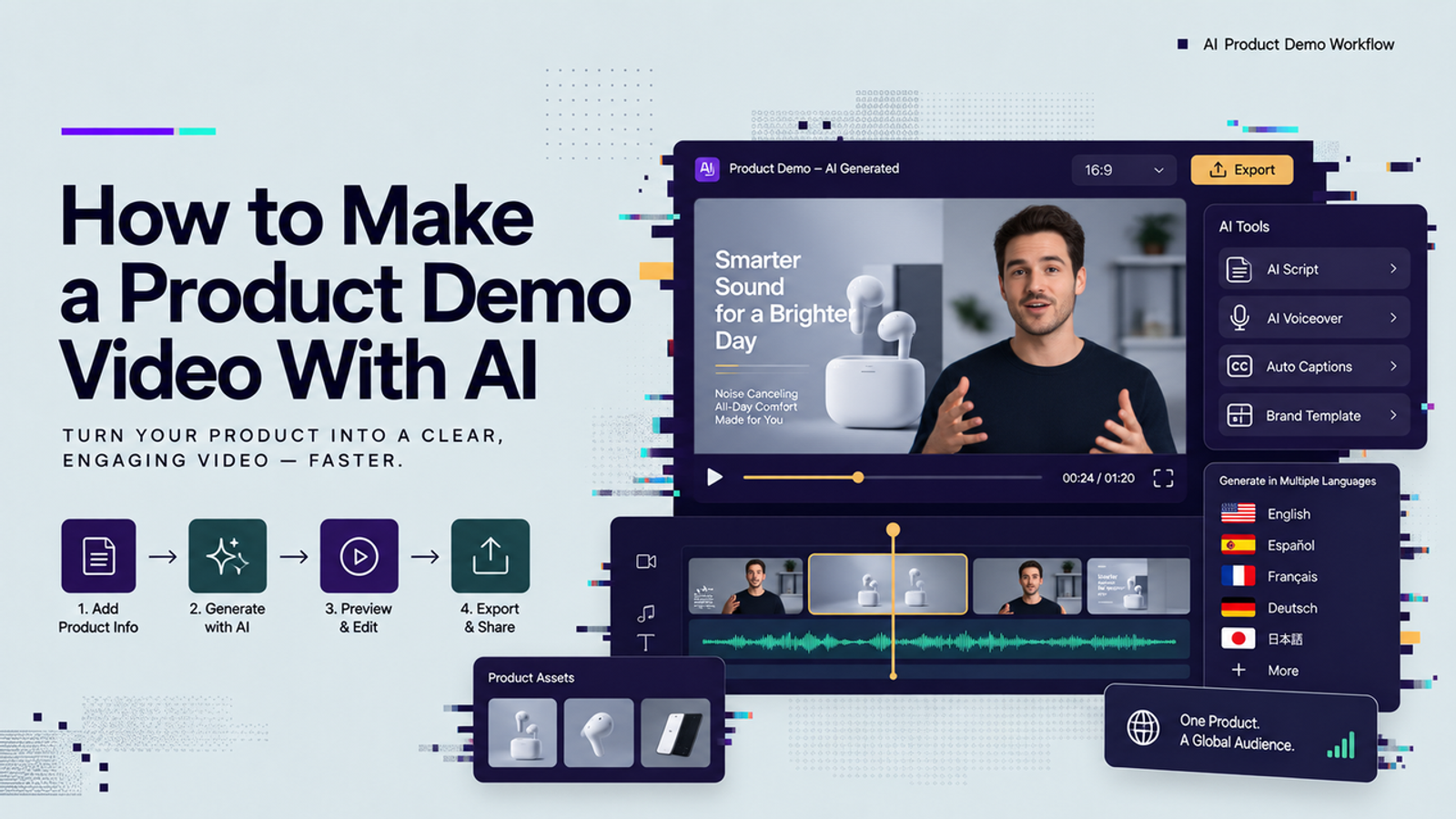
Wizstar describes workflows using product links, photos, scripts, avatars, and video translation. Those inputs can support product creative and explanations. For a demo requiring exact software behavior, retain approved screen captures and verify how the selected workflow uses them. A generated approximation of an interface is not evidence of the real operation.
Internal Control and Ongoing Iteration
Internal control is useful when someone has time and skill to exercise it. Check whether that person can replace a scene, revise narration, export captions, and preserve the approved parts of a project in the chosen tool and plan.
Generation access does not automatically include an editable timeline, project history, or team approvals. If you decide to produce internally, the AI product demo workflow covers preparing assets and reviewing a draft before export.

| Criterion | Agency route | Internal team using AI |
| Product evidence | Agree who captures or rebuilds approved scenes | Supply reliable source material and check generated elements |
| Creative direction | Include scripting and storyboards in scope | Assign an internal decision-maker |
| Revisions | Confirm rounds, turnaround, and extra-work terms | Confirm editing capability, usage costs, and operator time |
| Continuing updates | Check project, retainer, or subscription arrangements | Check editable assets and available capacity |
| Localization | Specify each language and review responsibility | Verify language support and arrange local review |
| Handoff | Agree working files, dependencies, and reuse rights | Confirm exports, project access, and portability |
Product Accuracy and Creative Control
In the invoice example, the viewer must see the correct approval rule, button, and resulting status. Product reviewers should compare those scenes with the actual software, whether an agency animated them or an internal editor assembled them.
For U.S. advertising, the FTC’s advertising principles require truthful, supportable claims. A simulated result should not imply verified product performance.
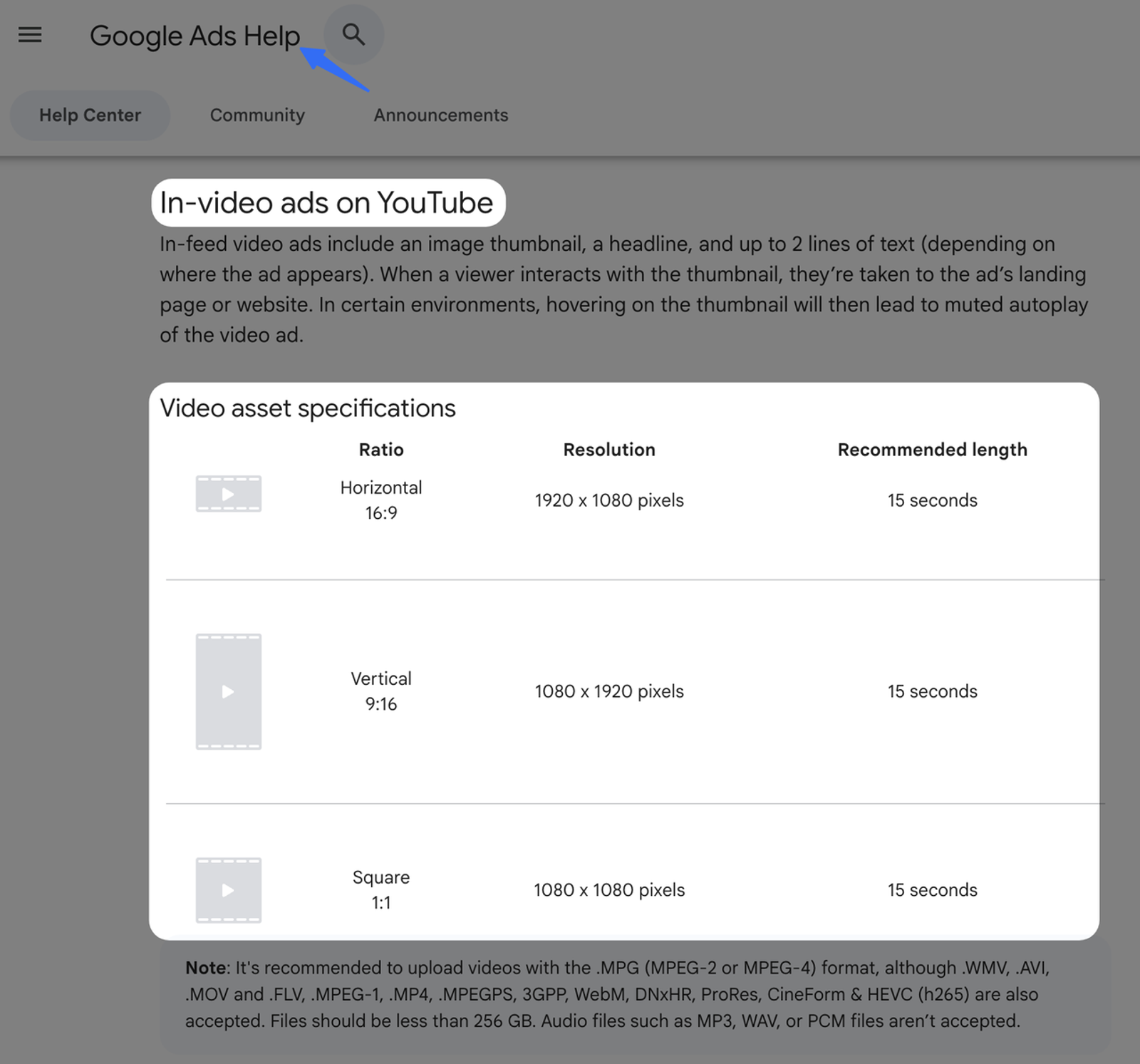
Agree placement requirements before production too. Google Ads specifications vary by format and campaign. A vertical cut may require reframing and larger UI details, rather than a simple crop of the homepage master.
Revision Load and Internal Time
Now suppose the invoice product changes: a button is renamed and approvals require an additional condition. This is an illustrative change request, not a reported client project.
| Affected material | Work required |
| Product scene | Capture or rebuild the changed step |
| Script and narration | Explain the new condition accurately |
| Captions and Spanish version | Update meaning and timing |
| Final exports | Recheck every affected cut |
An agency can handle this if its scope and files support maintenance. An internal team can handle it if its tools and skills support the edit. If the AI tool only generates narration, the screen replacement still happens elsewhere.
Keep two records when comparing proposals:
External charges: production or subscription fees, additional revisions or generation, localization, licensing, and export add-ons.
Internal hours: briefing, asset preparation, production or vendor coordination, product review, language review, and delivery.
Keep cash and hours separate unless you apply a consistent internal labor rate. A lower invoice can still require more staff time.
Scalability, Localization, and Governance
Reusable scenes help only when they remain accurate and editable. Localized narration may also require revised UI text, pacing, captions, and claims review. W3C’s caption guidance explains accessibility requirements involving dialogue, speaker identification, and meaningful sound information; translating dialogue alone does not cover every need.
For confidential screens or personal data, use an approved vendor and upload process. The NIST Generative AI Profile provides organizational risk-management guidance; it does not certify an individual tool. Check access, retention, training use, and deletion terms for the service you intend to use.
Use a Hybrid Model When Responsibilities Split
A hybrid arrangement can work when an agency develops the story and master production while your team maintains selected versions. Agree that split before production begins.
For the invoice demo, the agency might deliver an editable master, separate narration, and modular UI scenes. Your team could update approved copy or generate replacement narration, then assemble it in a compatible editor. Complex animation may still return to the agency.
Receiving an MP4 does not guarantee access to separate text, sound, or animation layers. Confirm source-file delivery, third-party licenses, and compatibility before counting on internal updates. Write the required handover materials into the agreement before production starts.
Choose the Fit for Your Demo Program
Choose an agency when the missing resource is production expertise or management capacity. That can apply to a single launch or an ongoing library.
Choose internal production with AI assistance when your team has reliable product assets, a clear message, an available operator, and a workflow that preserves the necessary accuracy. A straightforward recorded walkthrough may need conventional editing alone.
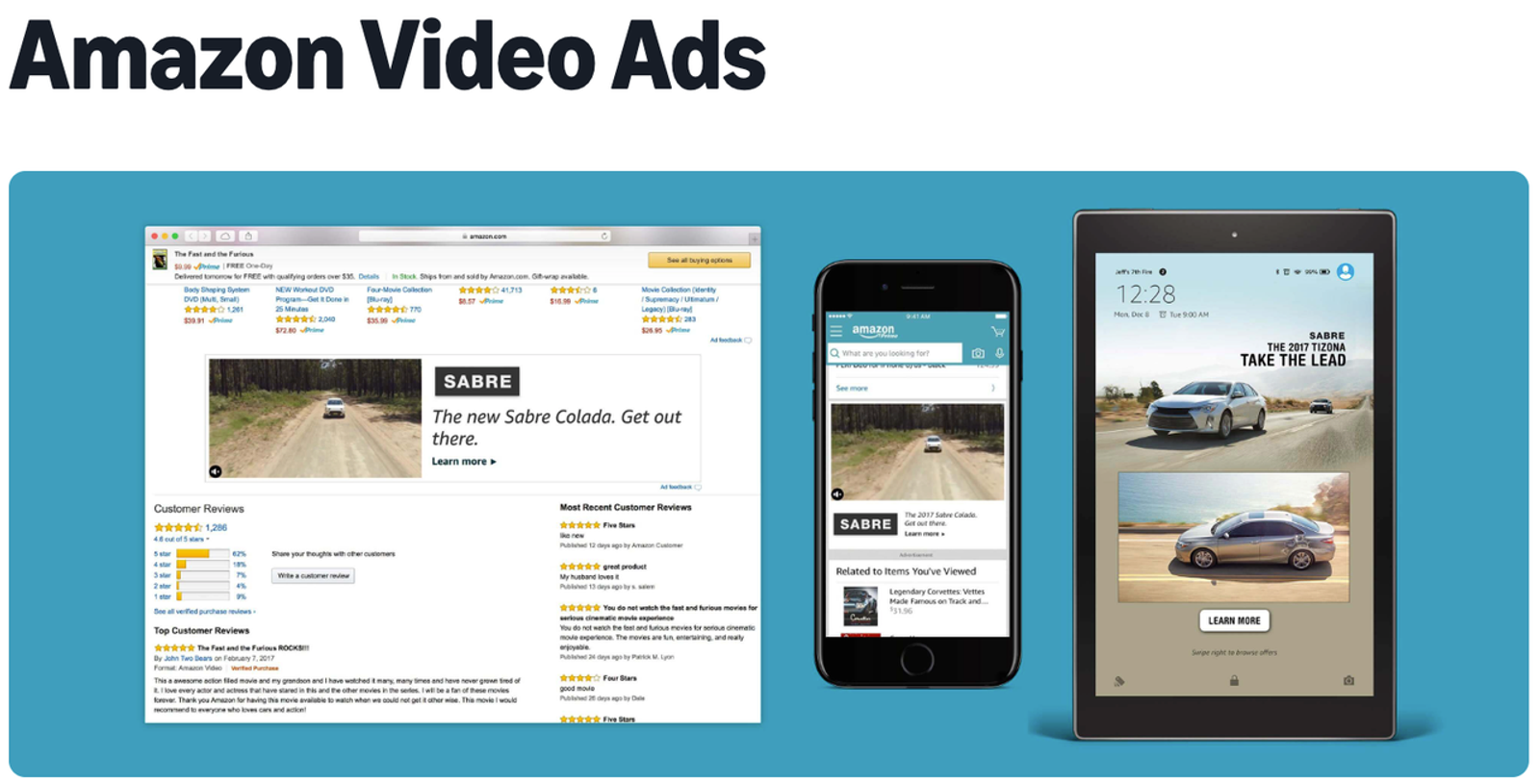
For ecommerce placements, check the exact destination: Amazon’s Video Ads specifications cover particular advertising placements, not every Amazon product-page video.
Before committing, ask who will execute the next change, which files they will need, and what it will cost in fees and staff time. If those answers are vague, the production arrangement is not ready.
FAQ
- What source files should an agency deliver after completion?
- Specify editable projects, linked assets, narration, captions, scripts, and final exports in the agreement. Also request a dependency list covering fonts, plugins, stock footage, and music. Some licenses cannot transfer with the files, so confirm what you may edit or reuse and what requires a new license.
- How should teams protect confidential product information during production?
- Approve the vendor and intended data use before uploading sensitive material. Test with sanitized screens or fictional records first. An NDA alone does not answer questions about storage, subcontractors, model training, or deletion. Route contractual and privacy questions to the relevant internal owners; requirements depend on the material and jurisdiction.
- Can one vendor support several localized demo versions?
- Potentially. Ask whether its scope includes translated scripts, localized UI, narration, captions, market review, and later corrections in every language. Name who approves each version. “Translation included” should not leave you guessing who fixes an inaccurate claim or an outdated screenshot after delivery.
- What happens when the product interface changes frequently?
- Classify the change first. A cosmetic label update may affect one scene; a changed workflow or eligibility rule may require new scripting and approval. Maintain a record linking product releases to affected scenes and language versions, and agree whether updates are included, quoted separately, or handled internally.
- Who should own vendor onboarding and final approvals?
- Assign a project owner to coordinate procurement and, where relevant, security, privacy, and legal review. Marketing owns the communication goal; product confirms behavior; brand and specialist reviewers approve their areas. Name one person authorized to release the final version after those reviews are complete.