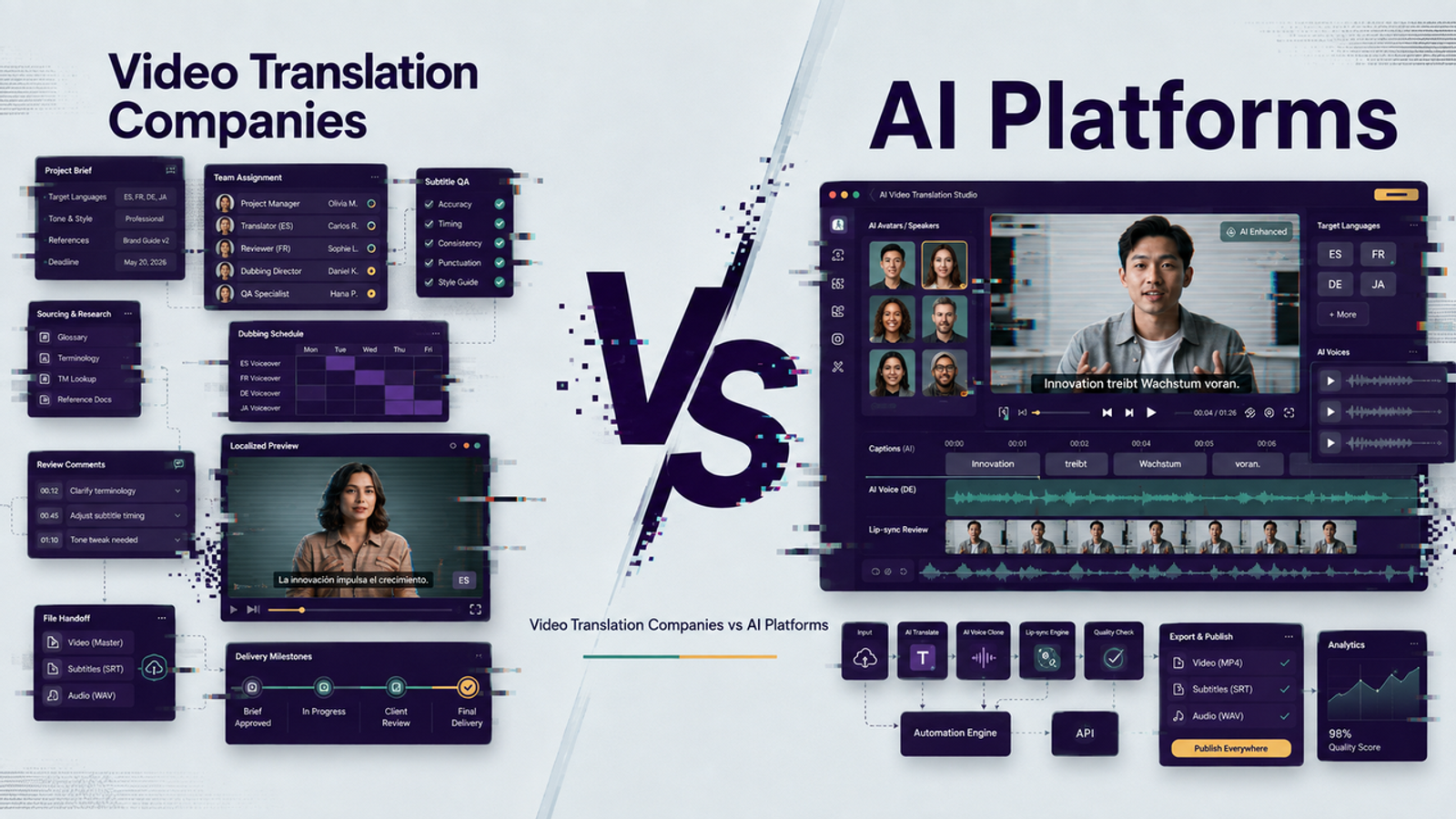
I’m Vela, and I usually test AI video tools by looking at the ordinary workflow, not the perfect demo. For video translation, that means checking who controls the script, voice, subtitles, review steps, and final approval before a campaign goes live.
When people compare video translation companies with AI platforms, they often jump too fast to “which one is cheaper?” or “which one is faster?” I would slow down there. For global marketing, procurement, and content operations teams, the better question is: who controls the meaning, the voice, the files, the approvals, and the correction path when something goes wrong?
This is not a clean “humans versus AI” debate. Managed video localization services, self-service AI localization platforms, and hybrid workflows can all make sense. The right choice depends on content risk, language complexity, deadline pressure, internal review capacity, and how much accountability your team needs on paper.
Quick Verdict by Project Type
For high-risk campaigns, regulated claims, executive messaging, medical, financial, legal, or public-facing brand launches, I would usually start with a managed service or a hybrid workflow. The reason is not that AI video translation cannot help. It is that review ownership, terminology control, legal escalation, and sign-off history matter more than raw speed.
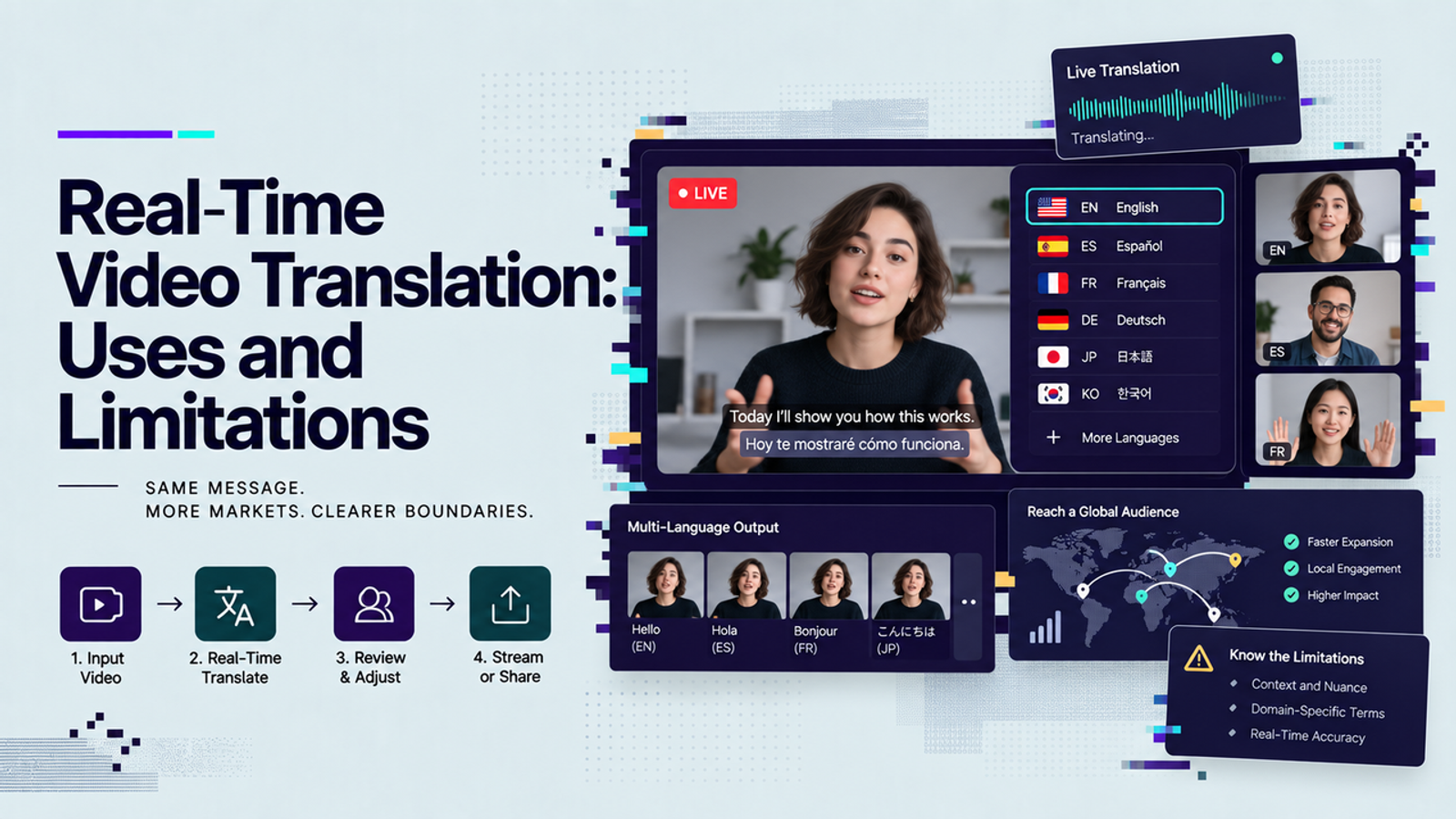
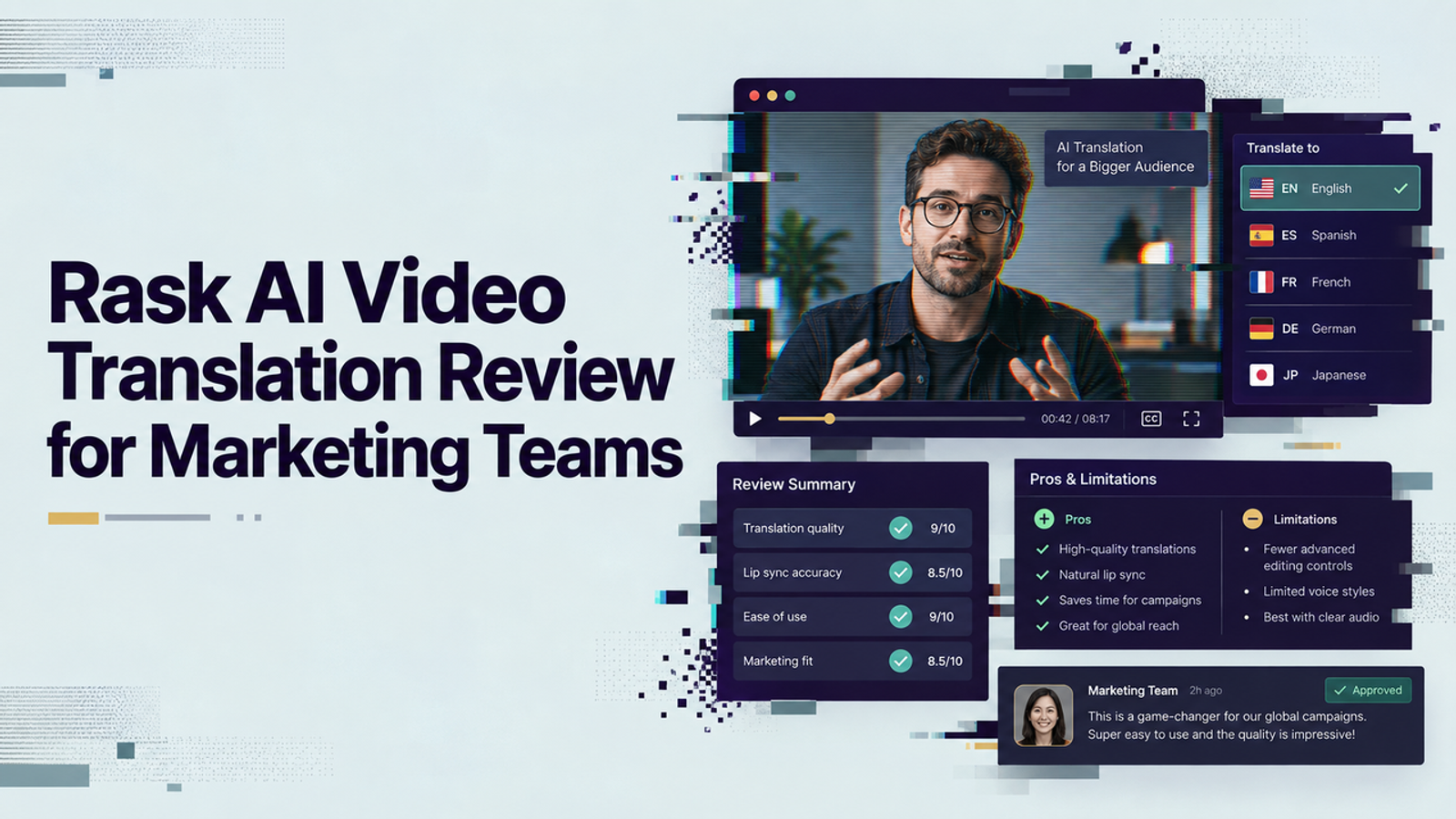
For low-risk social variants, internal drafts, creator-style tests, product education clips, or early market experiments, a self-service AI video translation platform may be enough. It can help teams create English subtitles, AI video dubbing, and multilingual marketing video drafts quickly, as long as someone checks the output before release.
For ongoing global content operations, the hybrid model is often the most practical. Let AI handle transcription, first-pass translation, timing suggestions, captions, and voice drafts. Then let humans handle terminology, claim accuracy, cultural fit, brand voice, and final approval. Useful, but not magic.
How the Two Delivery Models Work
Managed Translation and Localization Services
A video translation company usually gives you a managed project structure. You send source files, brand guidelines, scripts, product terminology, market requirements, and deadlines. The provider manages translators, editors, voice talent, subtitle specialists, project managers, and sometimes local reviewers.
This model is strongest when the work needs documented quality control. Procurement teams may ask whether the provider follows recognized translation-service processes such as ISO 17100 requirements, how linguists are selected, whether subcontractors are used, and how corrections are handled after delivery.
The trade-off is less direct speed and flexibility. If your team needs ten rough versions by tomorrow morning, a managed service may feel heavy. But when the content carries legal, medical, financial, or brand-sensitive claims, that heaviness can be a feature.
Self-Service AI Video Platforms
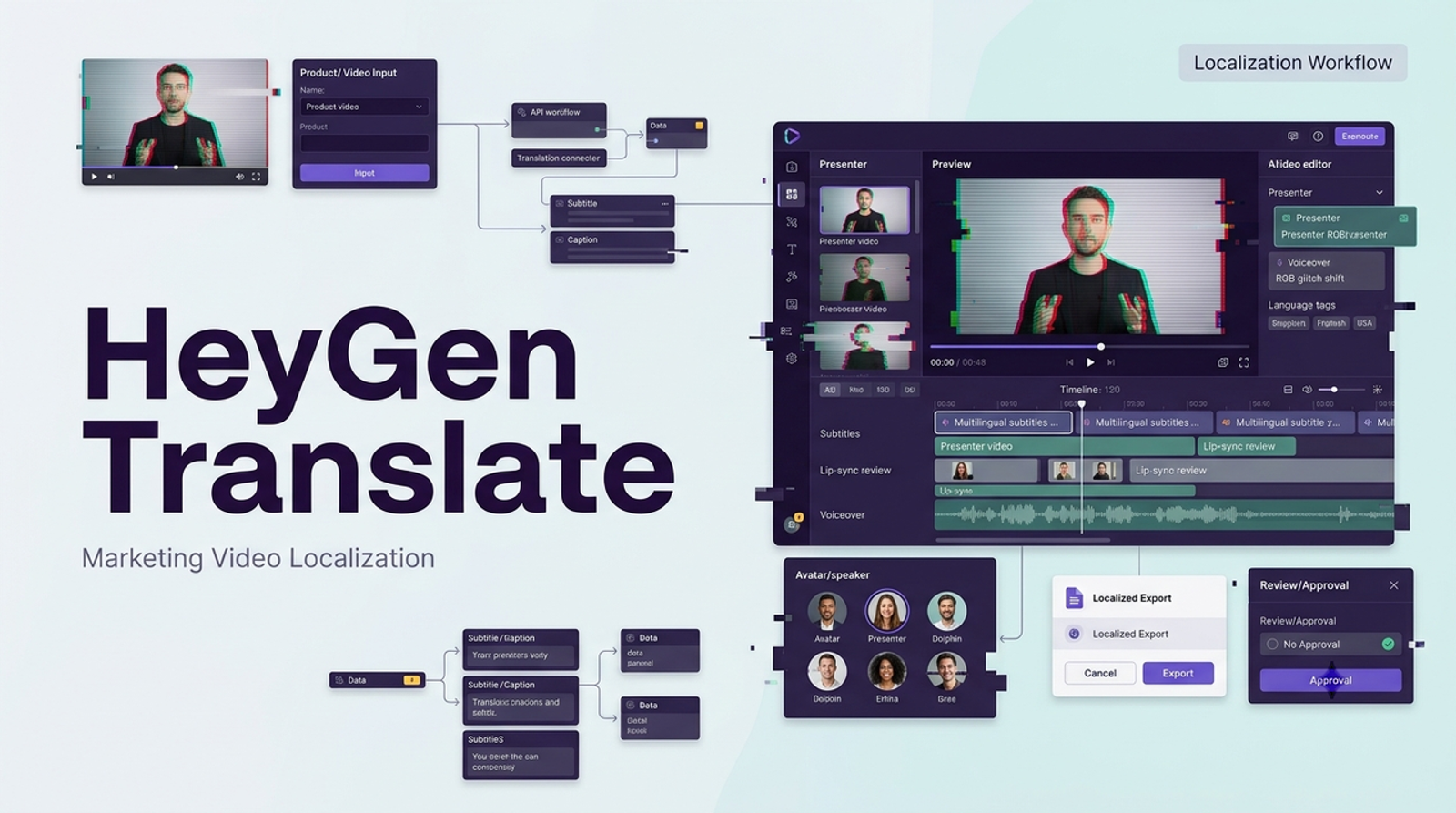
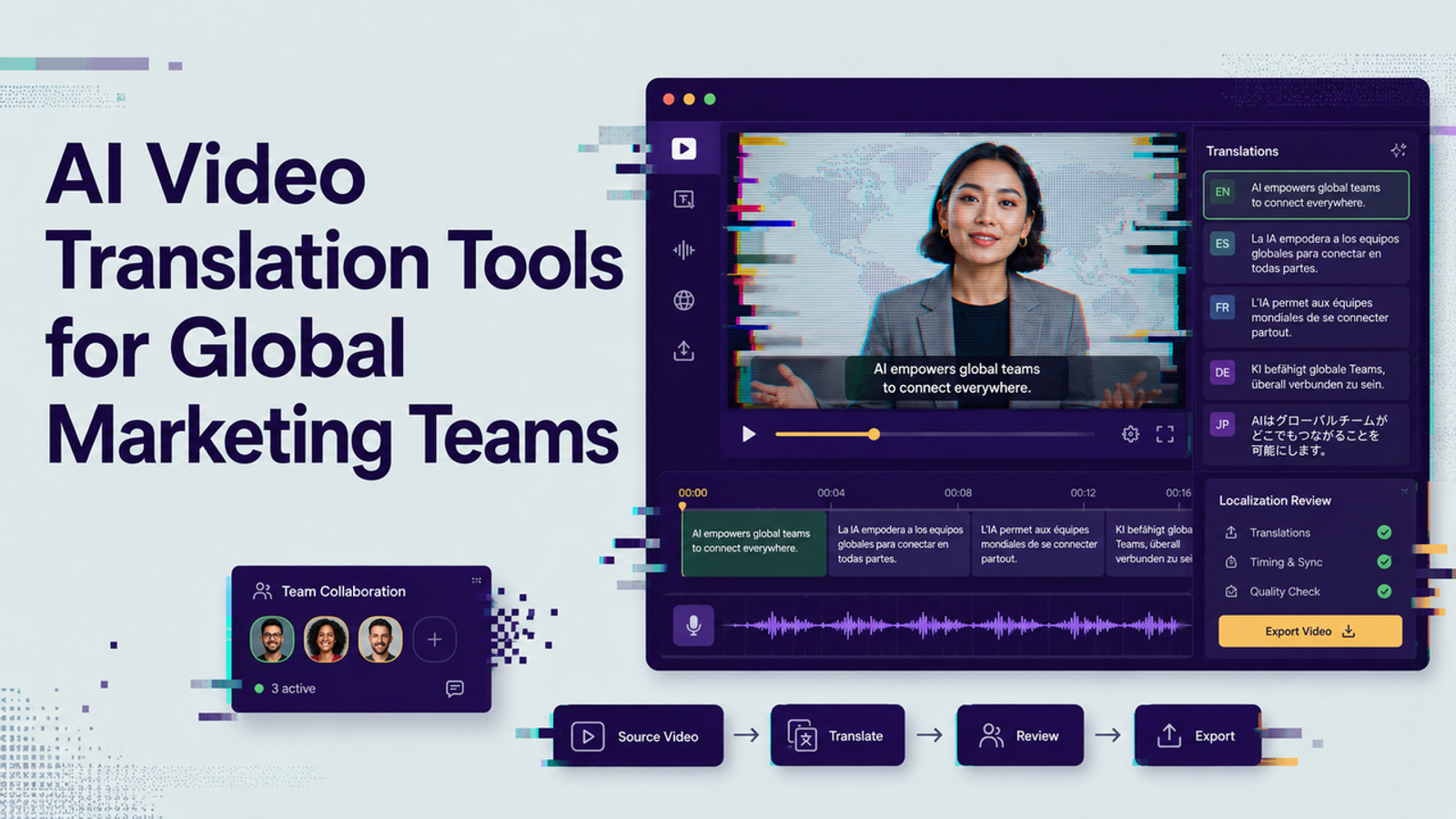
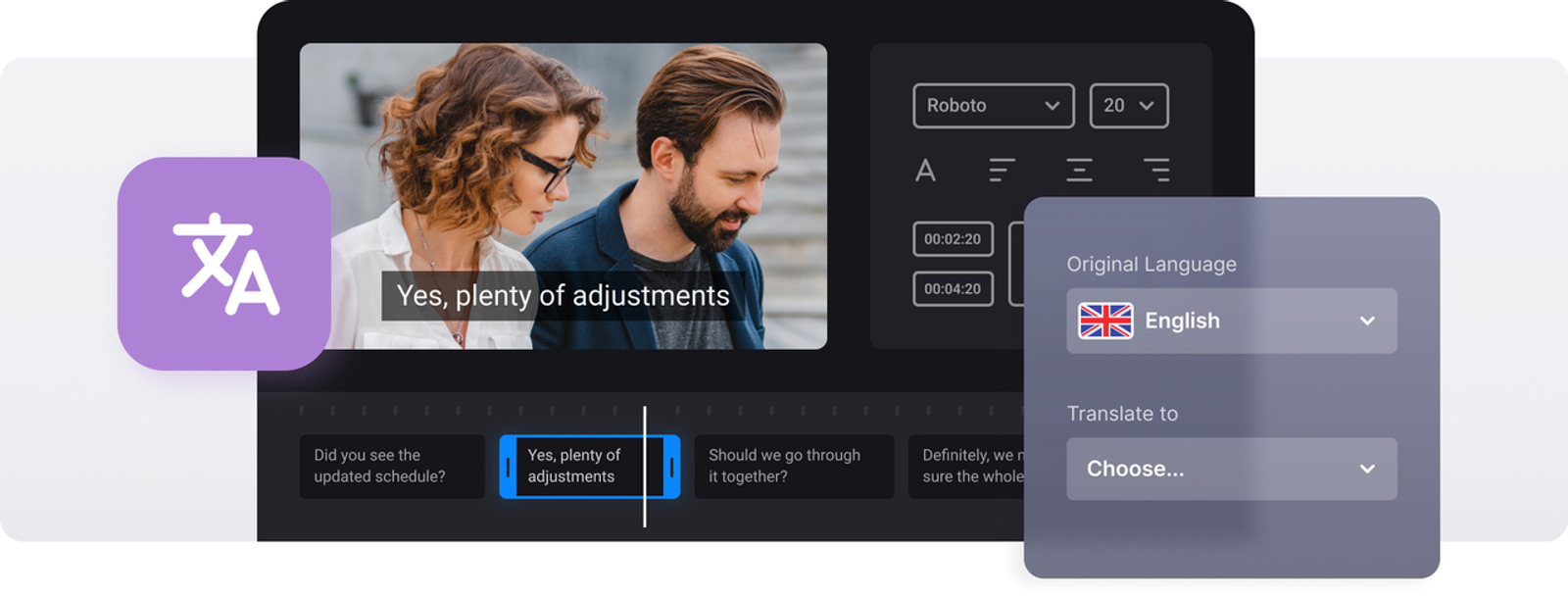
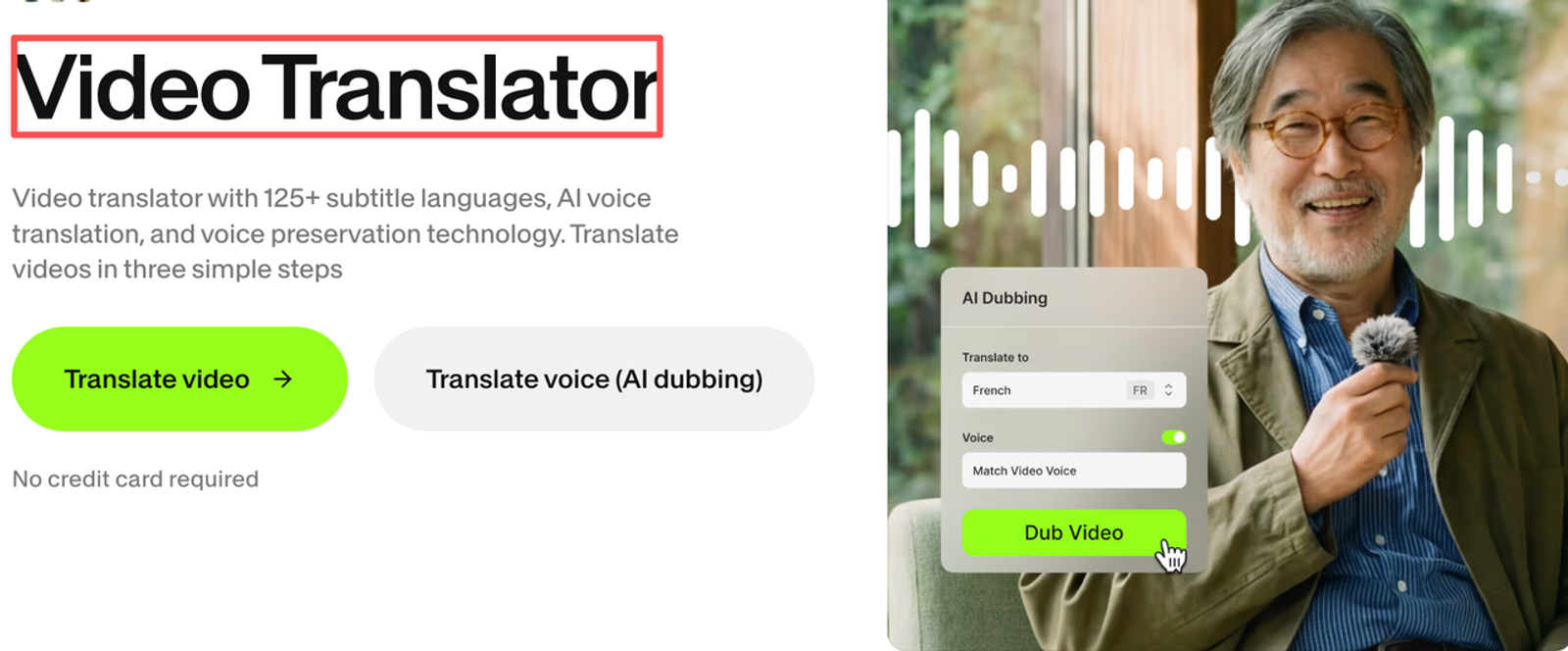
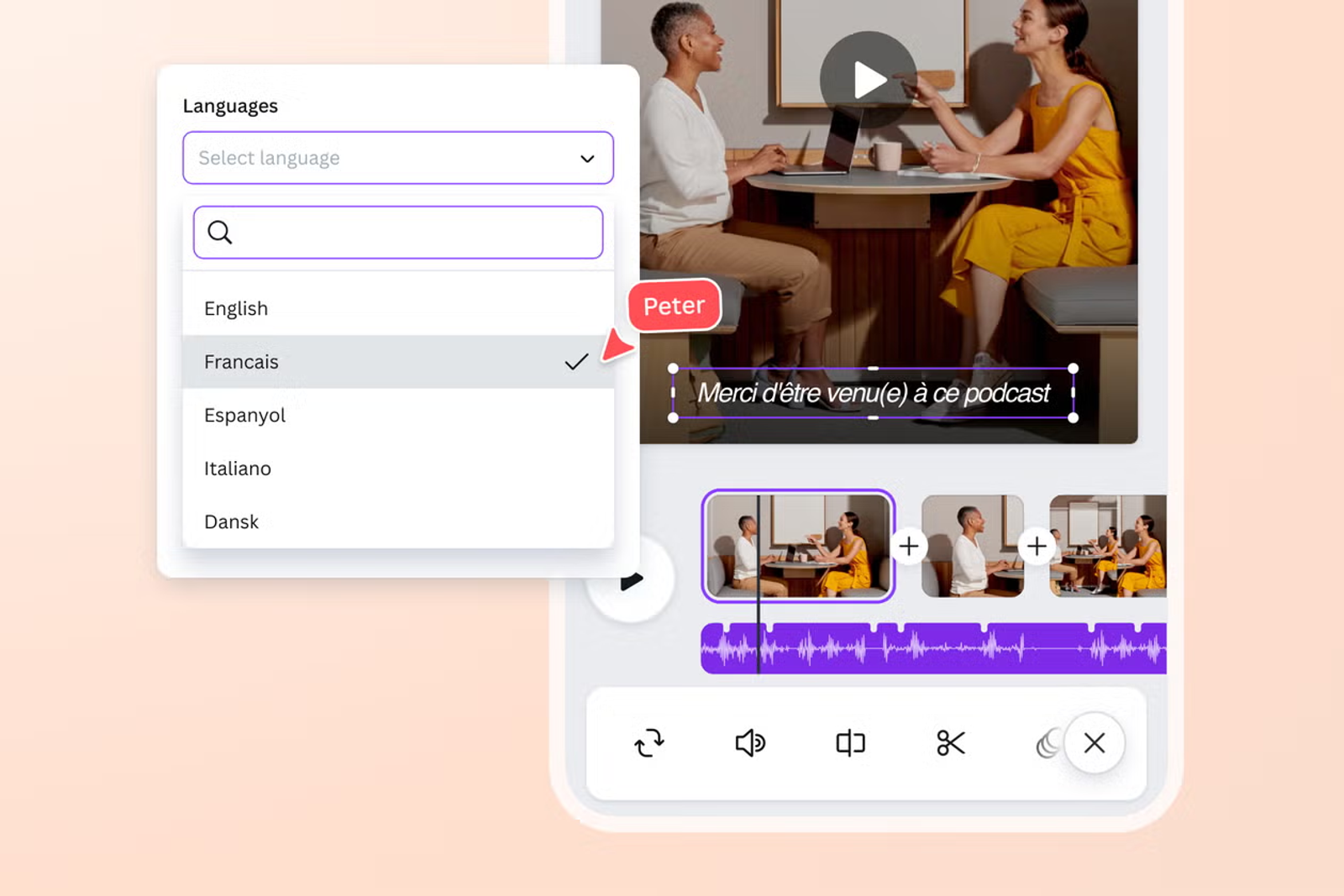
A self-service AI localization platform gives the marketing or content team more direct control. You upload the source video, review the transcript, select languages, generate translated voice or subtitles, and export versions. Some tools also support AI video dubbing, lip sync, speaker matching, and caption styling.
This model works well when the team already knows how to review localized content. I would not treat it as “no human needed.” I would treat it as “the first version arrives faster, so the review step starts earlier.” Small thing, but it matters.
The risk is accountability. If the translation slightly changes a product claim, uses the wrong legal wording, or makes the speaker sound more certain than the original, the platform may not be the party responsible for the campaign. Your contract, internal approval trail, and local compliance review still matter.
Compare Translation and Review Control
Managed video translation services usually offer stronger review control when the project has many stakeholders. You can define source approval, translation review, legal review, voice approval, subtitle approval, final video sign-off, and post-launch correction steps.
AI platforms give faster iteration, but the review burden shifts inward. That can be good if your team has strong localization managers. It can be risky if the person exporting the video is also the only reviewer.
My practical test is simple: can the workflow preserve the source meaning, product terminology, required disclaimers, and regional tone after two or three revision rounds? If not, the faster option may still create more cleanup later.
Compare Voice, Captions, and Lip Sync
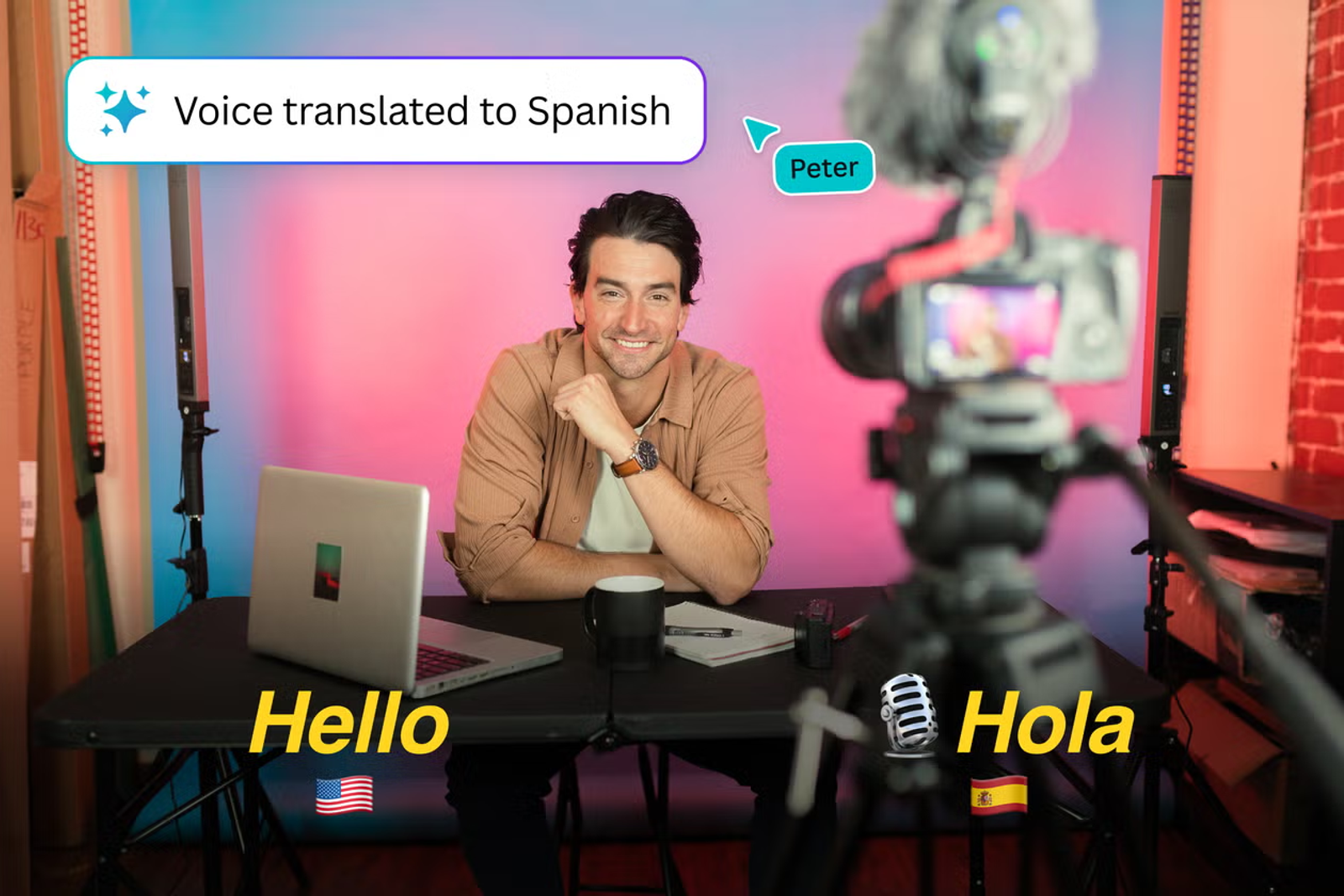
Voice is where this comparison gets less clean. A managed provider can cast human voice talent, direct tone, and control pronunciation. That matters when the speaker represents the brand, a founder, or an expert. AI platforms can generate voice faster and may be useful for drafts, short social clips, or content where speed matters more than performance nuance.
Captions need their own review. It is not enough that text appears on screen. The caption format, timing, line breaks, reading speed, and export compatibility can affect whether the video feels professional. For web-based caption workflows, the W3C WebVTT format is a useful standard reference because it defines timed text tracks used for captions, subtitles, chapters, and related media metadata.
Lip sync is useful when it is quiet. By that, I mean the viewer keeps listening instead of staring at the mouth. If the speaker turns, smiles, covers the face, or speaks quickly, lip sync can become more noticeable. I would always review the hardest five seconds of the clip before approving the full version.
Compare Accountability and Project Management
This is where video translation companies still have a strong case. A managed provider can name who translated, who edited, who reviewed, who approved, and what process was followed. For procurement, that paper trail may matter as much as the final video.
AI platforms can still support accountability, but the buyer has to design it. Save the source transcript, generated transcript, translated script, glossary version, voice settings, caption file, export date, reviewer notes, and final approval owner. Without that, you may have a beautiful video and no audit trail.
For synthetic or AI-manipulated media, teams should also watch disclosure rules. In the EU, the AI Act Article 50 includes transparency obligations around certain AI-generated or manipulated content, including deepfakes. I would not treat disclosure as a footer task. It belongs in the campaign review checklist.
Compare Scalability and Cost Structure
AI platforms usually scale better when the content volume is high and the risk is moderate. If you need twenty language drafts for product education, training clips, or social testing, self-service AI video translation may reduce waiting time. The real cost depends on usable outputs, not just subscription price or per-minute rates.
Managed services scale differently. They may be slower to start, but they can protect quality across languages, markets, and review layers. For global brand launches, that consistency can be worth the project management cost.
The mistake is comparing one vendor quote against one AI platform plan. I would compare total project cost: transcript cleanup, terminology work, translation, review, voice, captions, editing, rework, emergency corrections, legal review, and internal time.
Compare File Exchange and Version Control
File handling is not glamorous. It is also where localization projects get messy very quickly. Managed providers may work with project folders, subtitle files, translation memories, glossaries, audio stems, and final masters. AI platforms may keep much of the workflow inside their own interface.
For larger teams, ask how files move between systems. Localization teams often care about interoperable formats such as XLIFF 2.2 because they help carry localizable content between tools. Video teams should also ask whether they can export captions, translated scripts, voice files, and review notes instead of being locked into one project view.
I would also keep a simple version naming rule. Source video, transcript, translation, audio, captions, and final export should all share a campaign ID, language code, date, and revision number. Boring? Yes. But boring saves launches.
When a Hybrid Workflow Works Best
A hybrid workflow works best when AI speeds up the first pass and people protect the final meaning. The AI platform can create draft transcripts, rough translations, English subtitles, multilingual voice versions, and lip-sync previews. The human team then checks terminology, product claims, cultural tone, brand voice, subtitle readability, and legal risk.
This is the model I would choose for many marketing teams because it does not pretend one side solves everything. It lets AI reduce repeated manual work while keeping humans responsible for judgment.
For media provenance, teams may also want to track how assets were created and edited. The C2PA specifications are useful to know because they focus on technical standards for media source and history. Not every campaign will need this today, but enterprise buyers are already asking better questions about synthetic media traceability.
Decision Checklist by Content Risk
Use managed video translation services when the content includes regulated claims, legal statements, sensitive public messaging, expensive media spend, executive speakers, or many local-market reviewers.
Use an AI localization platform when the content is lower risk, needs fast iteration, has a clear source script, and can be reviewed internally before publishing.
Use a hybrid workflow when you need both speed and control. This is often the best fit for recurring product marketing, multilingual campaign testing, customer education, and regional social content.
The real question is not “company or AI?” It is “which parts of this workflow can be automated safely, and which parts still need accountable human review?”
Conclusion
Video translation companies and AI platforms solve different parts of the same problem. Managed services give structure, accountability, and reviewer control. AI platforms give speed, flexibility, and scale. Hybrid workflows often give the most practical balance, especially when marketing teams need many versions but cannot risk loose claims or messy approvals.
I would choose based on content risk, not tool category. For a low-risk social draft, AI video translation may be enough after review. For a global launch with legal or brand exposure, I would slow down, document the workflow, and keep humans in the approval loop. That does not make the process old-fashioned. It makes it safer.