Hi, I’m Vela. Most days, I’m somewhere between a half-finished coffee, a messy folder of source videos, and one tiny question: can this AI video workflow actually help a team publish something useful without making the review process worse?
For this piece, I’m looking at video localization from that very practical place. Not as a magic “translate and export” button, but as a real campaign workflow where transcripts, voices, captions, visuals, cultural context, and approvals all have to survive the trip from one market to another.
Video localization is not “translate the script, add subtitles, ship it.” That sounds fast, but it usually breaks where business videos need to be safest: claims, product terms, voice, timing, visuals, and local meaning. I would treat video localization as a workflow, not a language task. The goal is to turn one source video into market-ready versions that a native speaker, a brand owner, and a legal reviewer can all defend.
For global marketing and content operations teams, the useful question is not whether AI can translate video. It can help. The better question is: where does human review sit, and what exactly must be approved before each market version goes live?
Translation and Localization Are Different
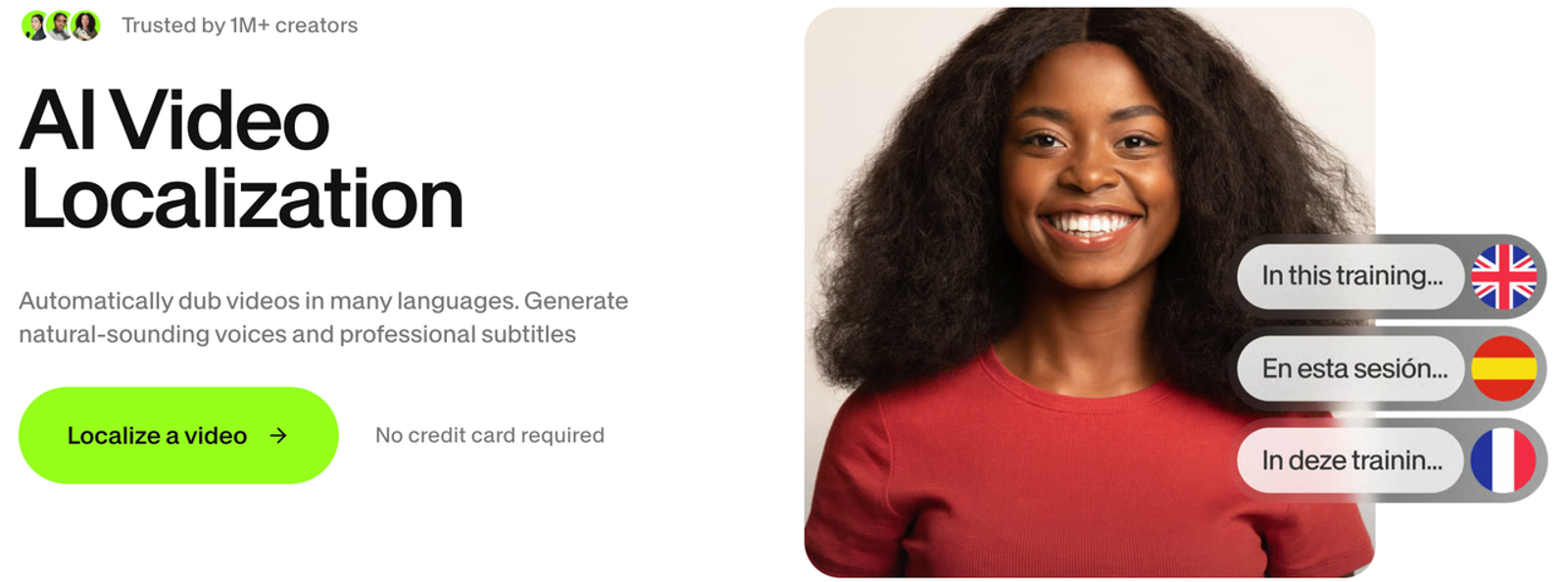
Translation moves meaning from one language to another. Localization makes the video feel intended for that market. Small thing, but it matters.A translated product line may be technically correct and still sound stiff, too aggressive, too vague, or culturally odd.
A dubbed voice may sound fluent but use a product term your sales team never says. Even dates, numbers, currencies, name order, and region labels can change trust, which is why standards such as Unicode CLDR locale data matter outside software UI too.
So I would not hand a machine-translated draft straight to media buying. AI video localization can speed up the first pass, but the final version still needs native-language review, brand review, and claim review.
Define Markets, Audiences, and Campaign Goals
Before touching the transcript, decide what each localized video is supposed to do. A launch awareness video, a product demo, a retargeting ad, and a customer education clip do not need the same level of cultural adaptation.
For each target market, I would write a short localization brief: audience segment, platform, video length, required format, approved product names, legal restrictions, preferred tone, and the action the viewer should understand by the end. Without the brief, every reviewer argues from personal taste.
This is also when to decide whether the market version should stay close to the original or adapt more freely. A technical tutorial may need precision; a social ad may need a local hook.
Prepare the Source Video and Language Assets
The cleaner the source package, the fewer surprises later. I would prepare the video, transcript, glossary, on-screen text list, visual notes, music notes, and claim evidence before opening the pipeline.
Lock the Transcript and Brand Glossary
Start with a clean transcript that includes speaker names, timing, pauses, product names, feature terms, acronyms, disclaimers, and words that must not be translated. This becomes the source of truth for subtitles and dubbing.
The glossary should separate words that stay unchanged, words with approved local equivalents, and words that need market review. Product claims need more care. For advertising content, the FTC’s advertising substantiation policy is a useful reminder that objective claims need support before use. I would not let a translation make a claim stronger than the original evidence can support.
Identify On-Screen Text and Cultural References
On-screen text is where localized videos quietly fall apart. A voiceover can be fluent while the product UI, lower-third, packaging label, screen recording, or testimonial quote remains in the source language. That looks unfinished.
I would tag each visual element as keep, translate, replace, blur, crop, or rebuild. Cultural references need the same treatment. A joke, holiday, gesture, idiom, or local pricing cue may work in one market and confuse another. Not a disaster. Just not final.
Build the Localization Pipeline
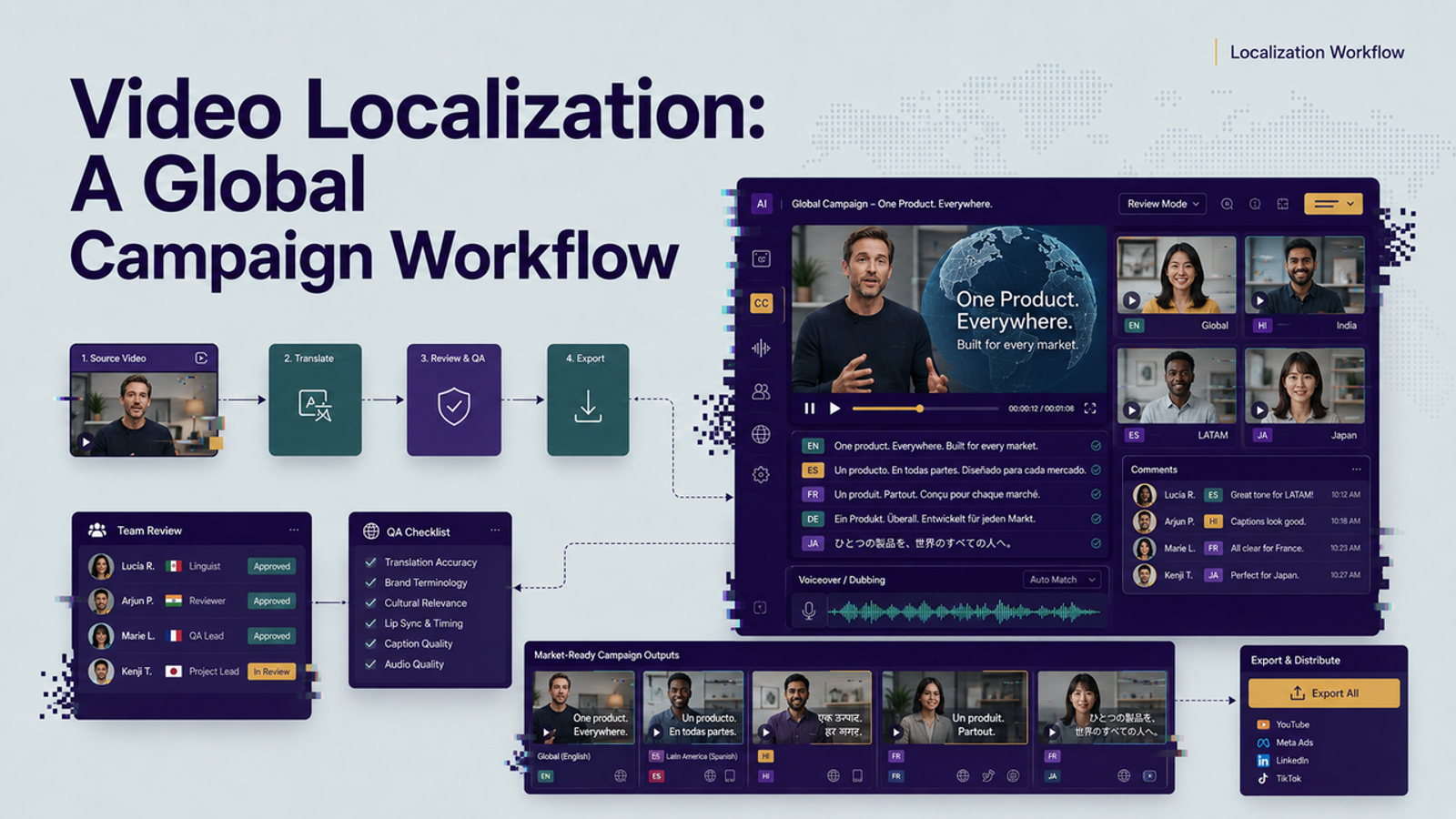
A good video localization workflow has clear stages, not one giant “localize” button. The practical order is transcript cleanup, translation, native edit, voice or dubbing, caption timing, lip sync if needed, visual adaptation, review, export, and archive.
Translate, Dub, Caption, and Sync
I would generate a translation draft first, then let a native reviewer fix meaning before voice generation. If you generate dubbing too early, every translation change becomes an audio change, and every audio change may affect timing.
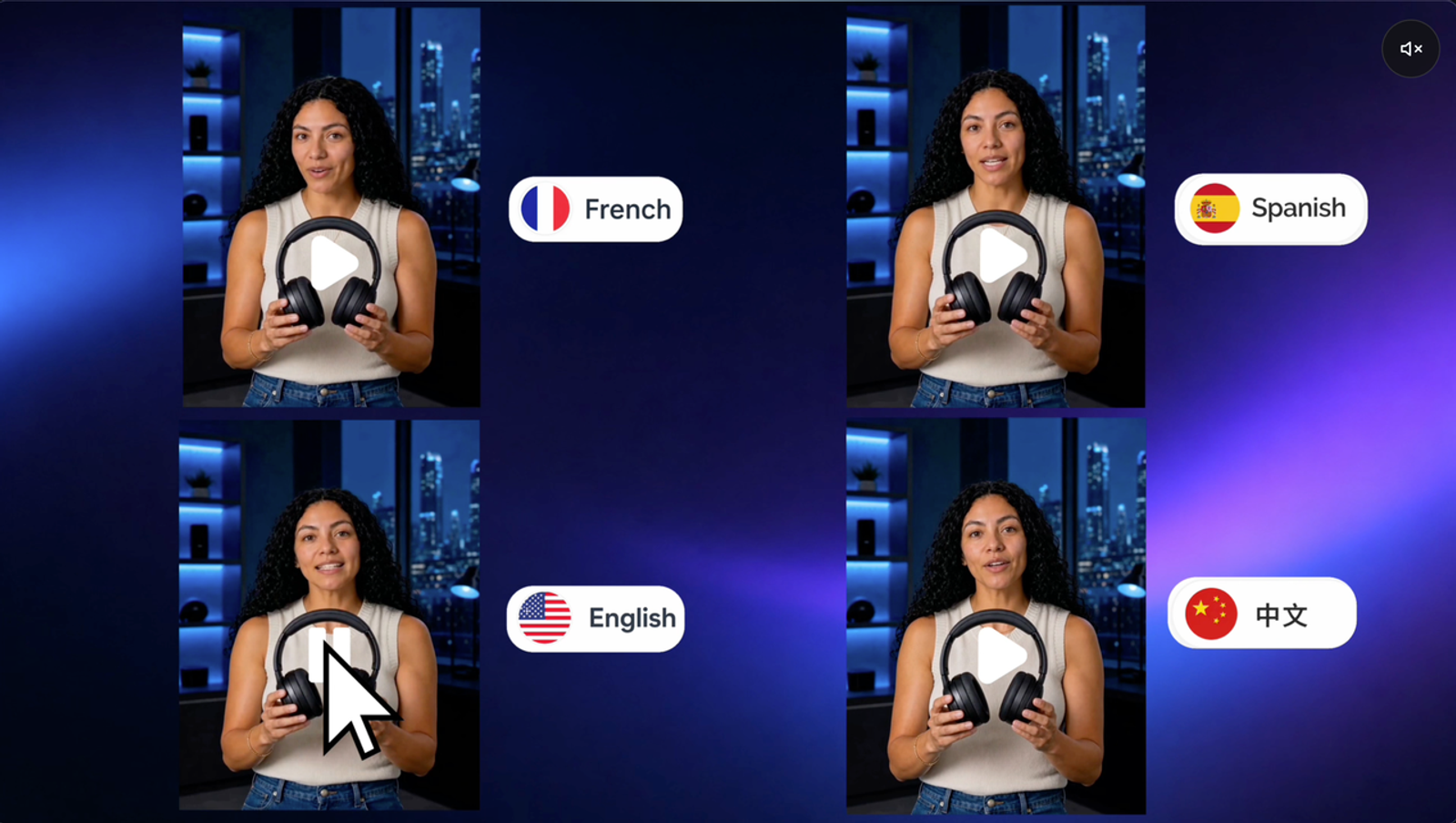
For subtitles, do not only check spelling. Check reading speed, line breaks, speaker labels, safe areas, contrast, and whether captions cover important visual information. For dubbing, listen for product names, emotional tone, pace, and category fit. For lip sync localization, I usually look at the mouth first, then the message. If the viewer keeps staring at the mouth, the message loses.
When AI-generated or manipulated audio/video is used, teams also need to think about disclosure. In the EU context, the AI-generated content transparency code connects to AI Act transparency obligations around marking and labeling certain generated or manipulated content. That is not something I would leave to the export stage.

Review With Native-Language Stakeholders
Native review is not a polite extra. It is the step that keeps multilingual campaign video from sounding like a translated document.
Give reviewers specific questions. Does the hook sound natural? Are product terms correct? Is the claim still accurate? Does the voice fit the audience? Are captions readable on mobile? Does any visual feel culturally off? Open-ended “what do you think?” feedback gets messy fast.
Approve Each Market Version
Each market version should have its own approval record: source file, language, market, reviewer, date, approved transcript, approved captions, final voice file, visual changes, claim notes, and export settings.
Accessibility should be part of approval, not a kindness pass at the end. W3C’s audio and video accessibility guidance points teams toward captions, transcripts, audio description, sign language where needed, and accessible media players. For campaign teams, captions are not just a performance tactic for silent autoplay.
Measure and Maintain Localized Videos
After launch, measure each market version separately. I would compare view-through rate, hook retention, caption-on behavior where available, click-through rate, conversion quality, comments, support questions, and rejection reasons from ad platforms.
Maintenance matters because product videos age. Prices change, screenshots change, packaging changes, regulations change, and one translated claim may become outdated faster than the source video. Keep a version log so the team can update the transcript, captions, and voice without guessing which file was approved.
Common Localization Failure Modes
The most common failure is treating the source video as perfect. If the original script is vague, overclaimed, too fast, or full of idioms, every localized version inherits the problem.
The second failure is approving text but not watching the final video. Timing changes meaning. A subtitle can appear too late, a voice can cover a visual reveal, or a lip sync pass can make a confident speaker look oddly distracted.
The third failure is skipping local ownership. Global teams can manage the pipeline, but someone close to the market has to say, “Yes, this sounds like us.”
Conclusion
Video localization works best when it is boring in the right places. Lock the transcript. Protect the glossary. Review the translation before dubbing. Watch the final video, not just the text. Keep approval records for every market.
AI can make subtitles, dubbing, and lip sync localization faster, but it does not remove the need for native judgment. The best workflow is a controlled handoff: machines help create the draft, people protect the meaning, and each market gets a version that can stand on its own.
FAQ
- Who approves cultural adaptations for regulated product categories?
- Use layered approval. A native-market reviewer checks language and cultural fit, the brand owner checks positioning, and legal or regulatory review approves claims, disclaimers, restricted terms, and required disclosures. For sensitive categories, I would document every change.
- Can localized videos reuse the original music license globally?
- Not automatically. Music rights can depend on territory, platform, duration, media type, and whether the track is synchronized with video. BMI’s explanation of synchronization licenses is a good reminder that audiovisual music can involve rights beyond a simple public performance license.
- How should teams handle names without local equivalents?
- Do not force a local equivalent unless the brand has approved one. Preserve real personal names, product names, and trademarks unless there is a documented market convention. For pronunciation, add phonetic guidance and ask a native reviewer to listen.
- Which video accessibility standards apply across target markets?
- There is no single global shortcut. WCAG is often used as a baseline for web content, but regional laws and platform rules can add requirements. At minimum, plan for accurate captions, readable contrast, transcripts for key informational videos, and audio description when visual information is necessary.
- Do localized claims need legal review in every region?
- For commercial claims, yes, that is the safer default. A translated claim can change strength, scope, or implication. “Helps reduce setup time” and “cuts setup time in half” are not the same claim. I would review the localized wording against local evidence.