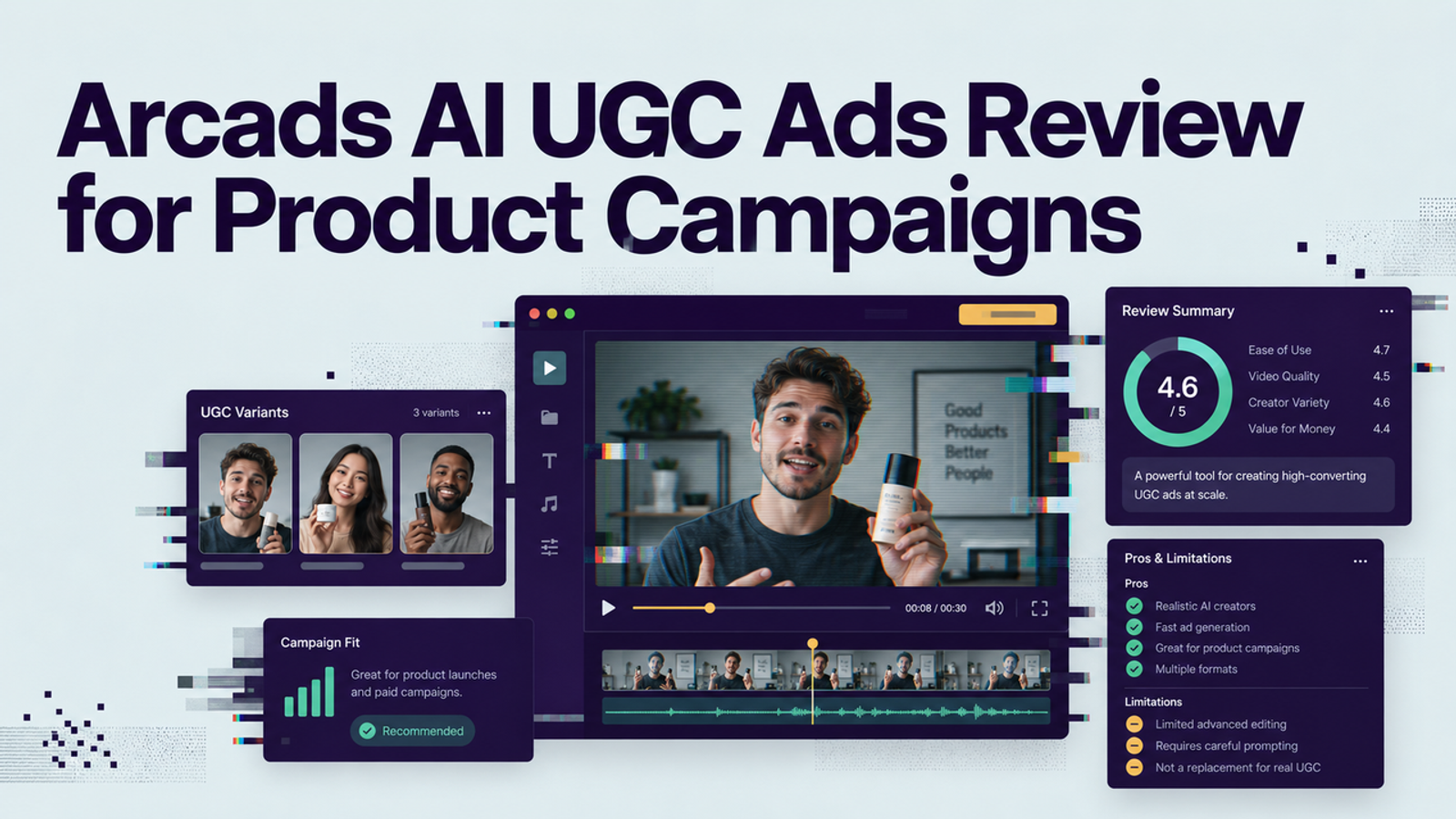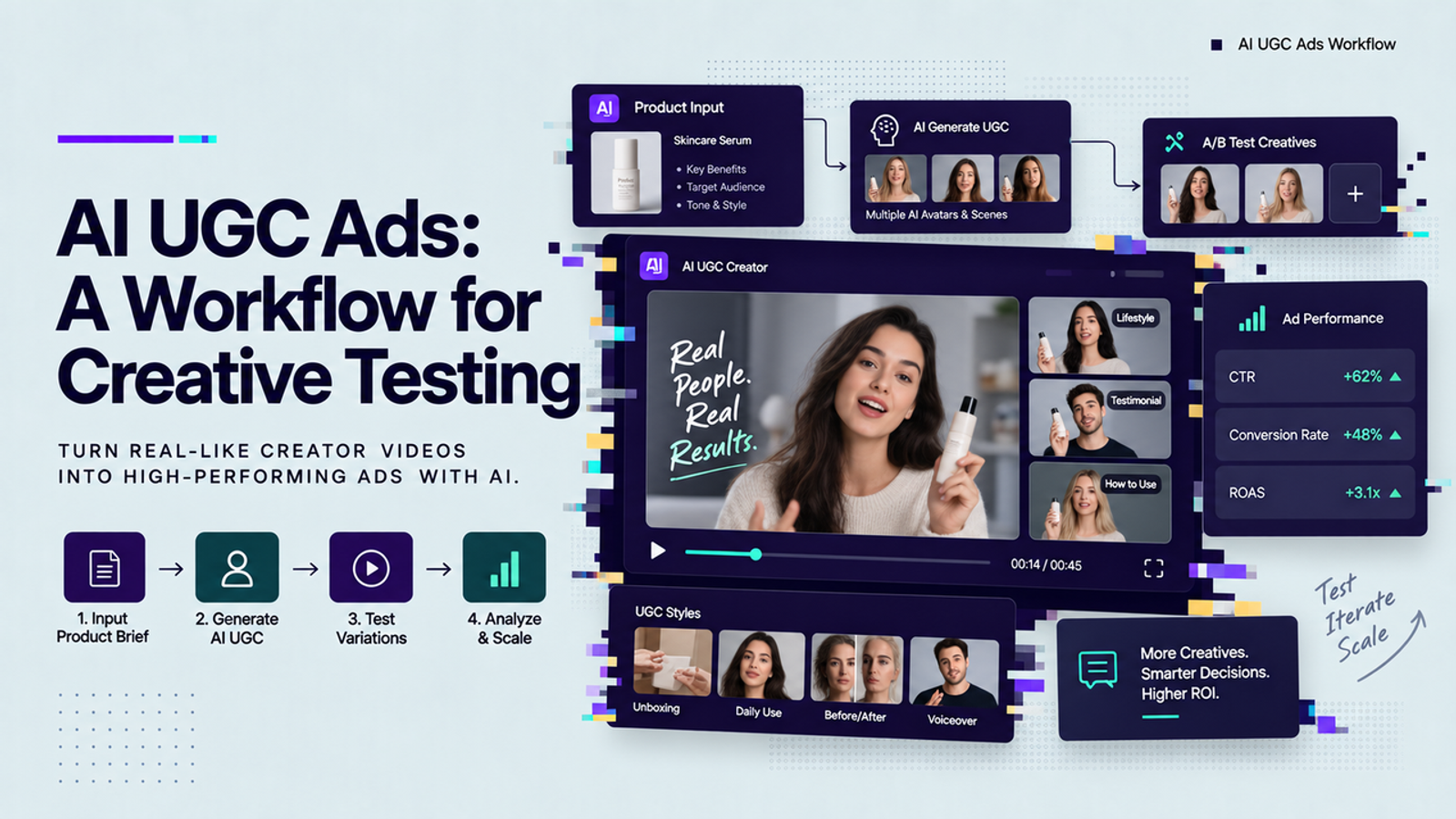
I’m Vela, and I like AI UGC ads best when everyone in the room admits what they are: creative tests, not fake customer stories. The useful part is not pretending a synthetic presenter had a life-changing experience with your product. The useful part is moving faster from a real customer problem to a few reviewable ad directions, then checking the claims before anything goes live. In this guide, I’ll walk through a simple workflow for briefing hooks, choosing product proof, generating controlled variants, reviewing accuracy, and learning from test results without turning one good draft into a miracle story.
What AI UGC Ads Are Designed to Do
AI UGC ads borrow the pacing and framing of user-generated content: a person on screen, a simple problem, a product moment, and a quick reason to care. They are not designed to pretend that a synthetic actor is a real unpaid customer.
For performance marketers, media buyers, and creative strategists, the value is speed before spend. UGC video ads AI workflows can help you explore hooks, presenters, scenes, and formats before a larger shoot. The output is a reviewable first version, not a guaranteed winning ad. No tool can honestly promise CTR, CPA, ROAS, or approval.
Before running creative, I would check the platform environment. TikTok’s official page on ad disclaimers says AI-generated, synthetic, or manipulated media can require disclosure. Meta has also described expanding AI information inside ads transparency tools. Small thing, but it matters.
Start With a Real Customer Problem
The weakest AI product ads start with “make this look viral.” Stronger ones start with a specific problem your buyer already recognizes.
For e-commerce, that problem might be “my desk cable mess looks terrible on calls” or “I cannot tell which bottle size fits in a carry-on.” For SaaS, it might be “my team keeps missing approval comments.” Keep it narrow enough to show in one scene.
I would write this part before opening the generator. If the problem is vague, the AI will usually compensate with generic enthusiasm: smiling, pointing, and a confident sentence that says almost nothing.
Build an Honest UGC-Style Brief
The brief is where AI UGC ads either stay controlled or drift into mush. I like to keep it short enough that a human creator could shoot it on a phone.
A useful brief includes the product, audience, customer problem, approved claims, forbidden claims, format, visual style, disclosure needs, and landing page promise. For Wizstar-style product ad work, that means starting from real campaign inputs — product links, images, scripts, avatars, and target formats — then turning them into versions a team can review.
Choose the Hook and Product Proof
The hook should make one promise, not five. “This tiny label printer fixed my shipping chaos” is easier to test than “This tool improves productivity, branding, operations, and growth.” Pair each hook with one proof moment: a before/after, close-up feature, screen action, package comparison, or short demonstration.
Claims need a source. If the page says “water-resistant,” use that wording only if it is approved. If it says “clinically proven,” slow down and ask for documentation. The FTC’s testimonial rule Q&A is a good reminder that fake or false testimonials are not a cute creative shortcut.
Define the Presenter and Setting
The presenter should fit the task, not distract from it. A synthetic creator can work for a quick product demo, founder-style explainer, or problem-solution ad. I would be more careful with medical outcomes, financial outcomes, or anything that sounds like lived experience.
The setting should be boring in the right way: kitchen counter, desk, bathroom shelf, warehouse packing table. The more ordinary the scene, the easier it is to judge whether the product proof is clear.
Generate Controlled Creative Variants
Controlled variants are not random versions. Change one or two creative variables at a time so you can learn something later.
For a first test, I would generate three to six variants: two hooks, two presenters, and maybe two settings. Keep the same product proof and CTA across the group. If everything changes at once, the result may perform, but you will not know why.
This is where an AI product ads workflow earns its keep. You are not replacing creative judgment. You are getting more reviewable directions before the campaign meeting. Five honest drafts with clean notes beat one glossy ad that nobody can interpret.
Review Product Accuracy and Creative Quality
I would not export the first version straight into Ads Manager. I would watch it twice: once as a viewer, once as a cranky reviewer with coffee.
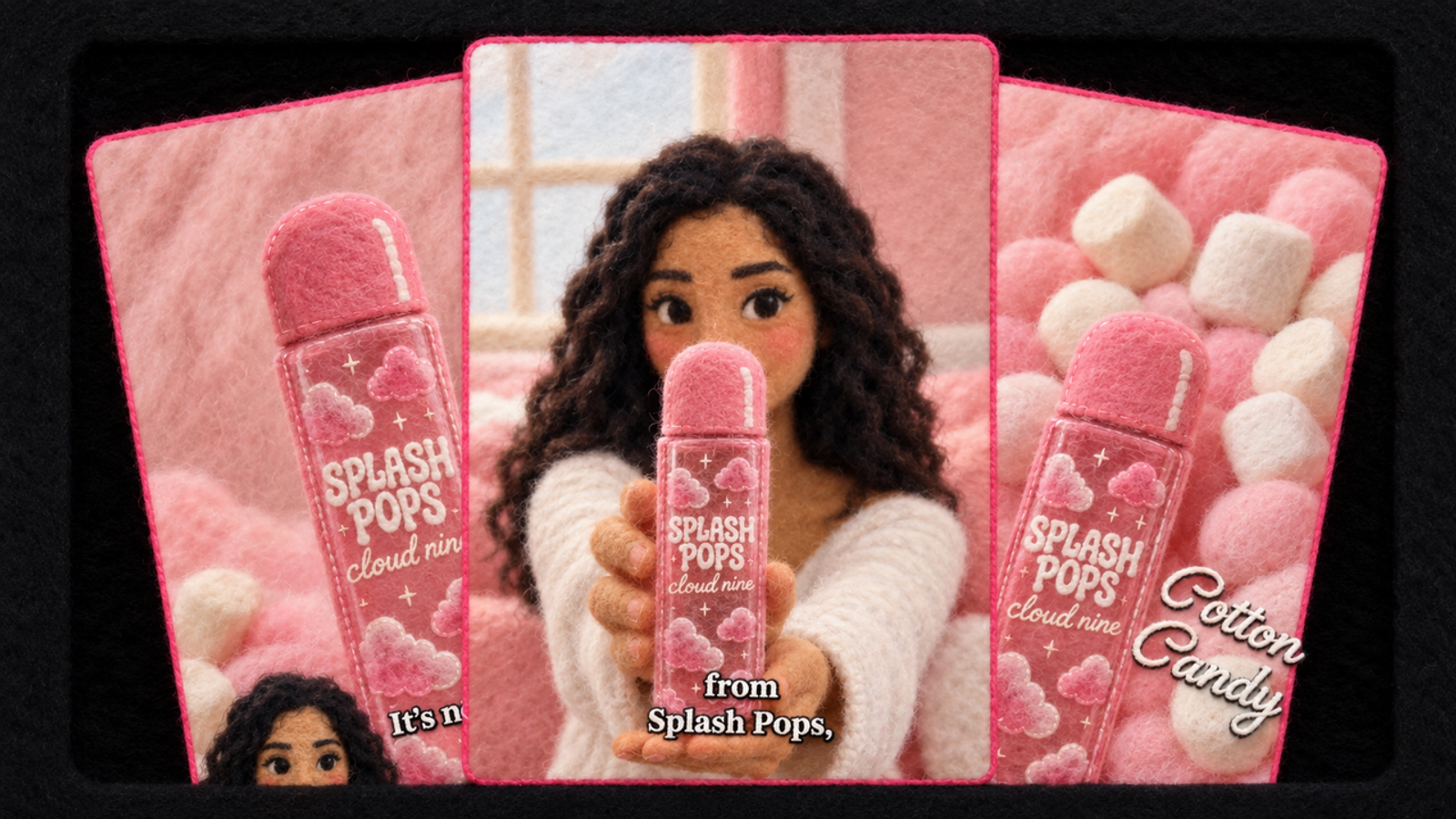
Check whether the product shape stays stable, the label or UI text remains readable, the presenter does not imply personal use unless that is true, and the voiceover matches the proof. Then check the landing page. The ad should not promise one discount, bundle, or result while the page says something else.
For Google campaigns, check the current AI labeling update, because Google notes that labels may help advertisers meet emerging transparency rules but do not guarantee legal compliance. A label is not a force field.
Run a Structured Creative Test
A structured test needs a clean naming system, a limited variable set, and a record of what changed. I would log the hook, presenter type, setting, product proof, claim source, disclosure decision, date, platform, audience, spend window, and result.
Do not judge too early, but do not romanticize noisy data either. One low-cost test can show which angle deserves more production effort. It cannot prove that AI UGC ads always beat filmed creator content.
Learn From Results Without Overclaiming
The useful question after the test is not “did AI win?” It is “what did we learn that changes the next brief?”Maybe problem-first hooks held attention longer. Maybe the desk setting beat the studio setting.
Maybe the synthetic presenter worked for a simple demo but felt odd when the script sounded too personal. Capture that as creative learning, not as a universal rule.
Also separate ad metrics from production metrics. If the ad performs, record how many generations it took, how much editing was needed, and which claim checks slowed the team down. Workflow value depends on usable versions, not raw output volume.
Authenticity and Creative Control Limitations
UGC-style does not automatically mean authentic. It means creative borrows the format of UGC. Authenticity comes from truthful framing, accurate claims, clear disclosure when needed, and not pretending a synthetic presenter is a real customer.
The IAB’s 2026 AI disclosure standards use a risk-based approach to transparency across AI-generated video, audio, synthetic voices, and digital twins. I like that framing because not every AI-assisted edit carries the same risk, but synthetic people and testimonial-style scripts deserve extra care.
I have not tested every category at campaign scale, so I would not write a blanket rule here. For low-risk product demos, AI UGC ads can be practical. For regulated products or testimonial-heavy claims, slow the workflow down and bring legal, compliance, or platform specialists in earlier.
Conclusion
AI UGC ads work best when the team stays honest about what is being tested. Start with a real customer problem, write one clear hook, attach one piece of product proof, generate controlled variants, and review the output before it reaches a campaign.I would not use AI to fake social proof.
I would use it to get off the blank timeline faster, compare creative directions, and learn what deserves another production round. Try one real product, one short script, and one target platform first. That will tell you more than a stack of perfect demos.
FAQ
- Who owns the likeness used in AI UGC ads?
- Ownership depends on the source asset, model terms, contracts, and local law. If the likeness is based on a real person, require written permission for paid ads, territory, duration, edits, and synthetic reuse.
- Can brands clone a customer's voice for UGC ads?
- Only with clear, specific permission. A customer saying “you can use my review” is not the same as permission to clone their voice for paid advertising.
- Do AI UGC ads qualify for creator whitelisting programs?
- Not automatically. Creator whitelisting, Spark Ads, and branded content workflows usually depend on platform rules, account permissions, and the relationship with the real creator or account owner. A synthetic presenter is not a real creator endorsement.
- How should teams answer questions about synthetic presenters?
- Answer plainly. Say the ad uses a synthetic or AI-generated presenter if that is true, then keep the focus on the product demonstration and verified claims.
- Can regulated products use synthetic testimonial-style creatively safely?
- Sometimes, but treat it as higher risk. Healthcare, finance, supplements, weight management, alcohol, and similar categories often have stricter claim, disclosure, targeting, and approval requirements. Do not imply results or expertise you cannot prove.