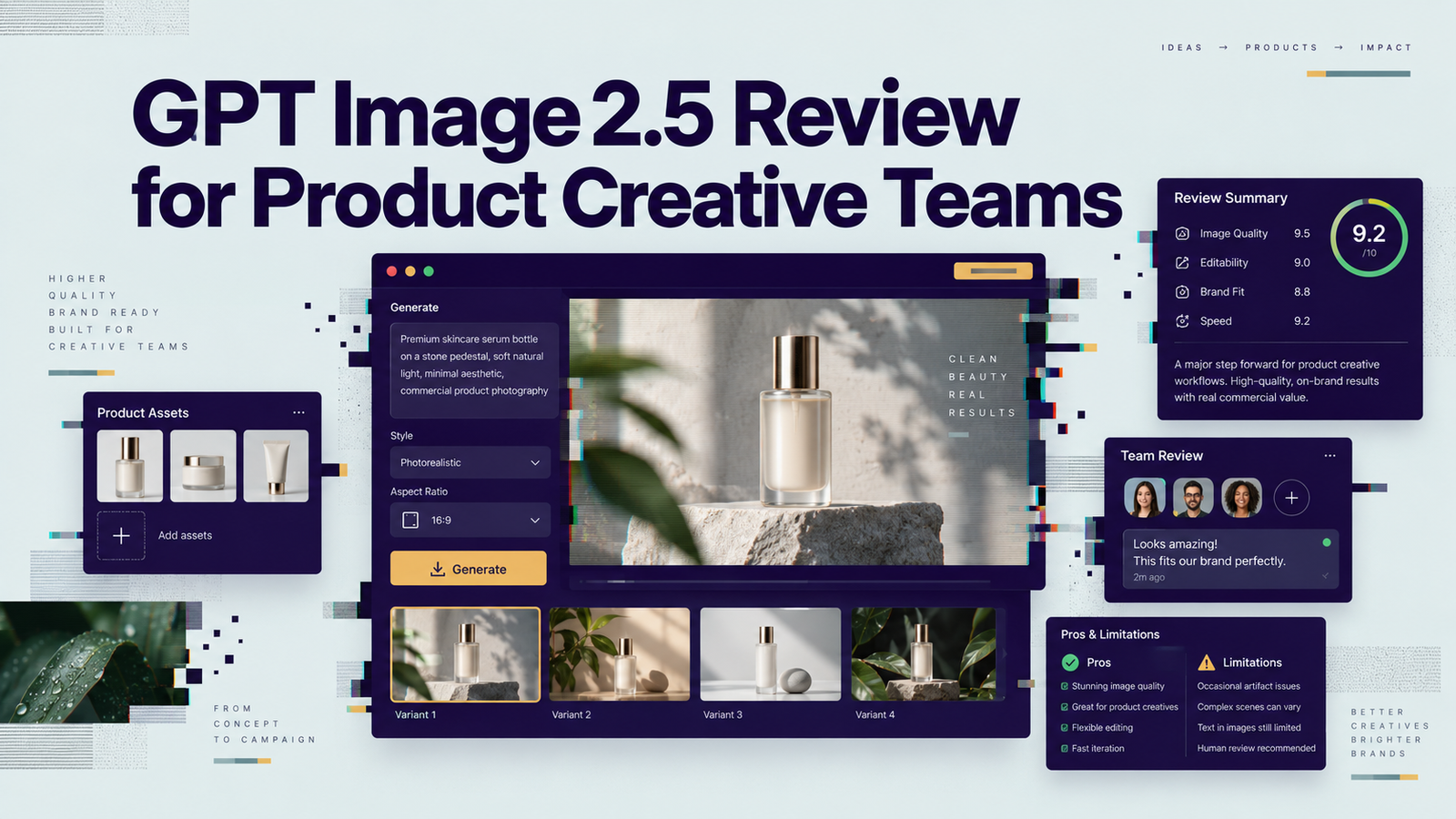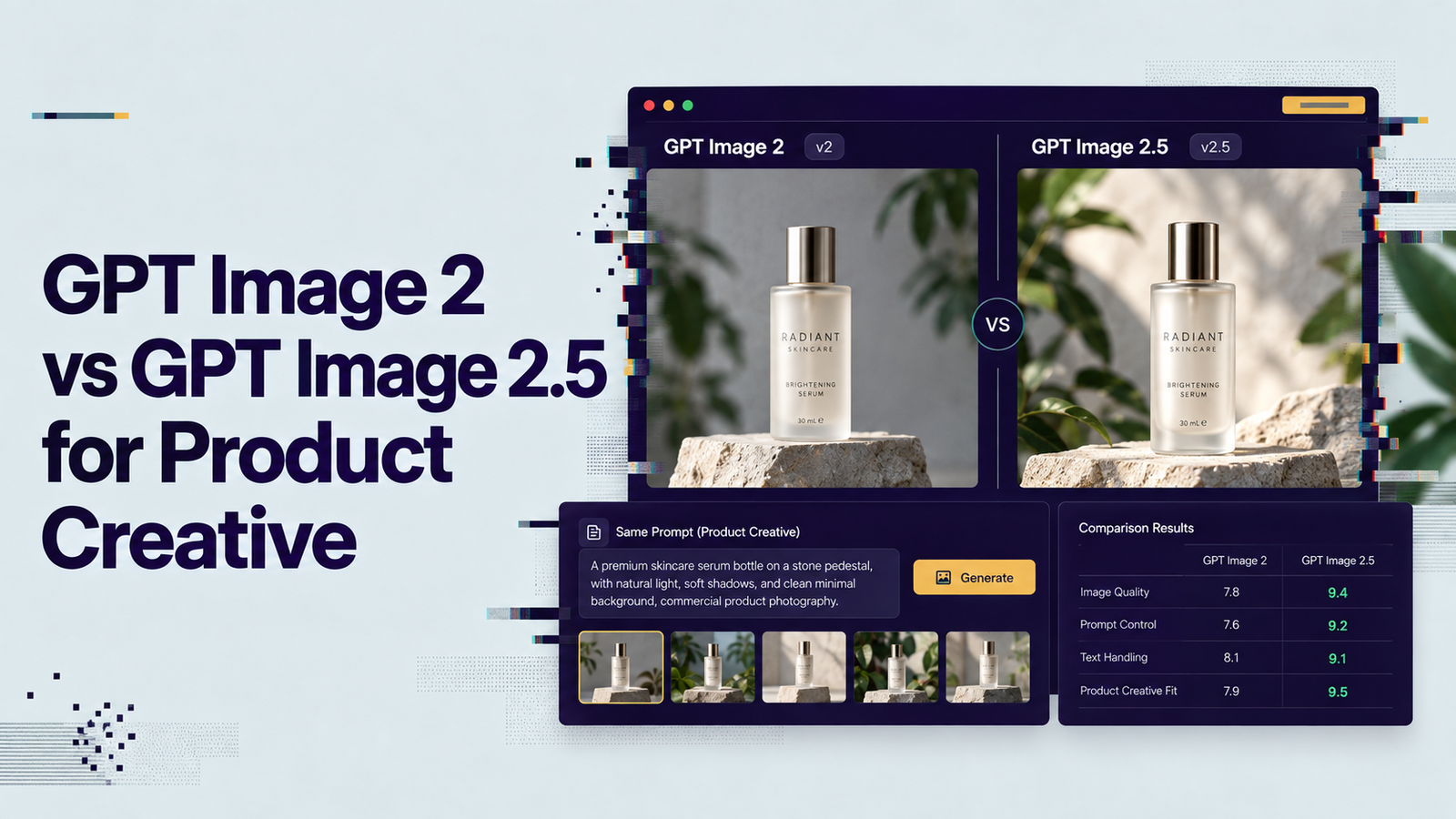
GPT Image 2 vs GPT Image 2.5 sounds like a simple “newer model or older model?” decision. For a product creative team, it is not. The useful question is whether changing models reduces the revision problems that cost time: product drift, unintended changes outside the edit area, and inconsistency after several rounds of feedback.
I’m Vela, and I tend to judge AI creative tools by what happens after the first image, not by the prettiest launch example. For this comparison, I’m using GPT-Image-2 against GPT-Image-2.5 Sunburst because OpenAI positions Sunburst for workflows where editing precision matters most. I have not run a new same-input benchmark for this article, so I will not invent a winner. Any 2.5 improvement discussed below is attributed to OpenAI and still needs validation on your own assets.
Quick Verdict for Product Creative Teams
I would not migrate a working GPT-Image-2 workflow just because 2.5 exists. GPT-Image-2 remains an active API model as of this review date, and a production team may already have prompts, review rules, asset preparation, and downstream editing built around it.
GPT-Image-2.5 Sunburst becomes interesting when your pain is concentrated in targeted edits and longer revision chains. OpenAI says Images 2.5 improves reference-subject preservation, editing precision, and multi-turn consistency, while Sunburst is the 2.5 API variant intended for tighter control across edits. That is a useful migration hypothesis, not proof that every product category will improve.
My short answer: keep GPT-Image-2 if it clears your acceptance bar; test Sunburst if product fidelity or revision drift is still forcing too much cleanup.
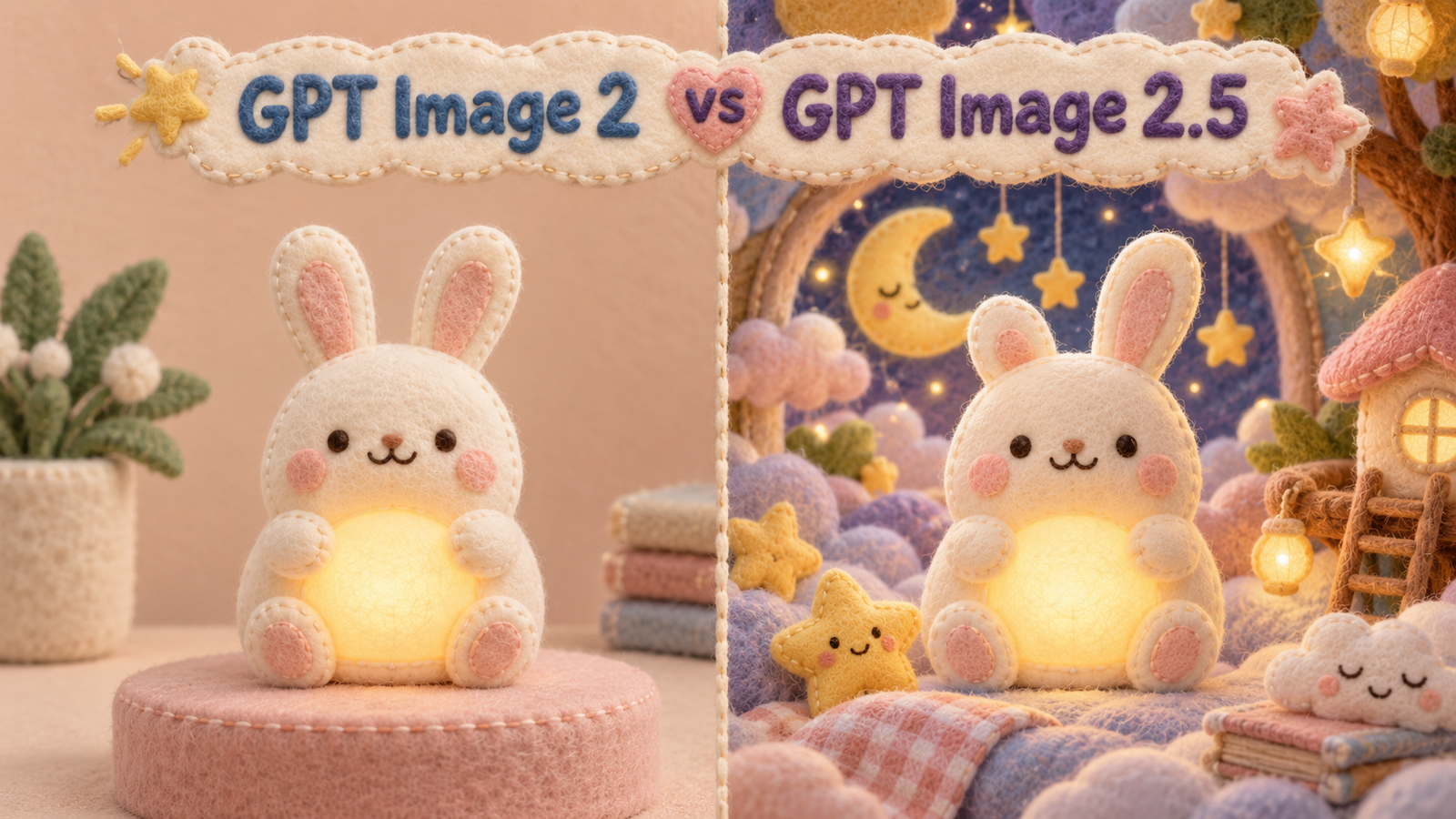
What Is Being Compared
GPT-Image-2
GPT-Image-2 is an API image generation and editing model that accepts text and image input and returns image output. The current GPT-Image-2 model card lists the undated gpt-image-2 alias and a dated gpt-image-2-2026-04-21 snapshot. For production testing, I would record the exact snapshot rather than writing only “GPT Image 2” in a spreadsheet.
This article is about the API model, not the ChatGPT product experience. Product-level tools, interface features, and model routing can change independently from an API model ID.
The GPT-Image-2.5 Family
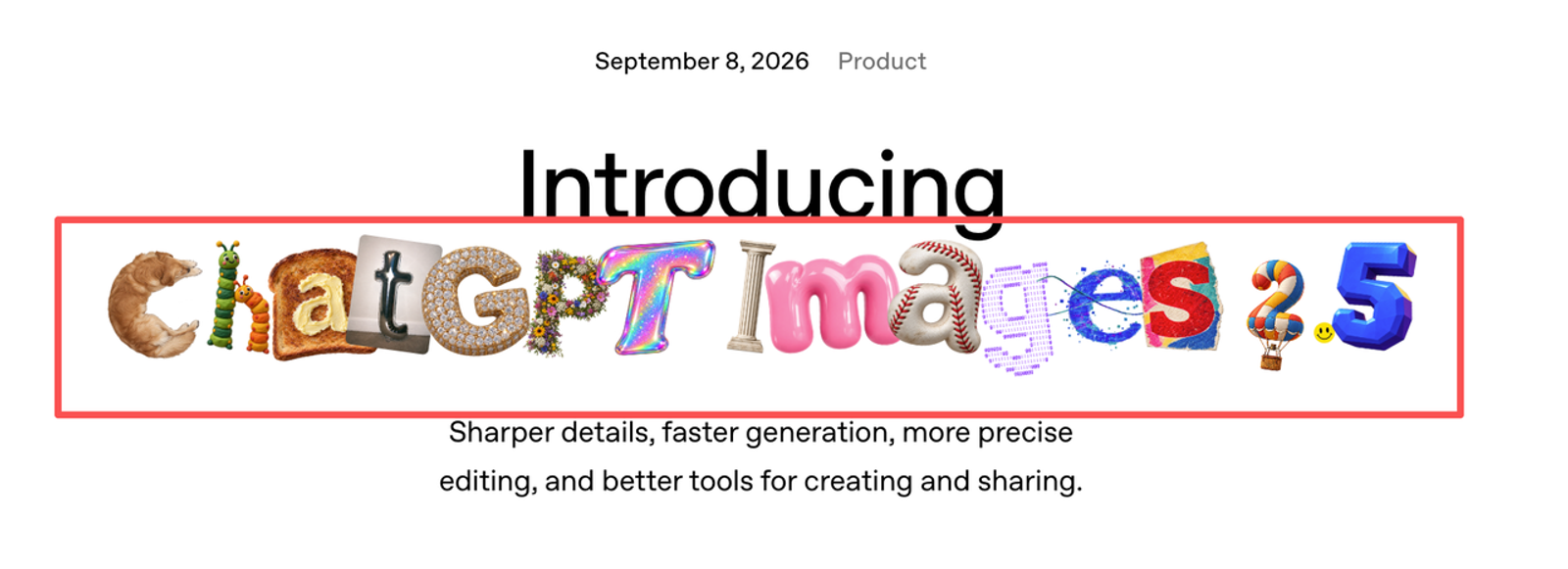
The 2.5 API family has two named models. GPT-Image-2.5 Flare is positioned as the faster everyday option, while GPT-Image-2.5 Sunburst is positioned for workflows where editing precision matters most. The current GPT-Image-2.5 Sunburst model card lists gpt-image-2.5-sunburst and the dated gpt-image-2.5-sunburst-2026-09-08 snapshot.
I am choosing Sunburst because this page is about product creative revision quality, not throughput. Mixing GPT-Image-2 against Flare for speed and Sunburst for editing would blur the comparison.
Compare Both Generations on One Product Brief
A fair migration test should begin with one authorized product reference and one locked brief. I would use a clean product photo with details that are easy to inspect: fixed package geometry, a visible label, a specific material finish, and a defined brand color. The baseline task could be a simple studio product image. Then run the same edit sequence on both models: change only the background, add one approved prop without altering the product, and make one later composition adjustment while preserving earlier approved details.
Keep the scoring sheet simple. Record product/reference fidelity, local edit isolation, and consistency across revisions. Also log the model ID, dated snapshot, quality setting, number of outputs, and failed or rejected results. Without those controls, a GPT Image comparison quickly becomes a comparison of different prompts, settings, and luck.
Product and Reference Fidelity
For product teams, fidelity is not “does the image look good?” It is whether the product is still the same product. I would inspect shape, proportions, label placement, typography, color, surface finish, logos, and small packaging details.
According to OpenAI’s Images 2.5 launch notes, Images 2.5 is better at preserving subjects in reference photos and retaining details while changing setting, style, or composition. That is encouraging for product creativity, but it is still an OpenAI-reported improvement. Without a same-brief test on your own SKU set, I would not turn it into a universal claim that 2.5 is more accurate for products.
Local Edit Isolation
This is the dimension I would watch most closely. If the request is “make the background warm gray,” I do not want the cap shape, label spacing, reflection, or product scale quietly changing at the same time. An edit that fixes one area but damages three approved areas creates another review cycle.
Sunburst is explicitly described by OpenAI as suitable where editing precision matters most. That makes it a sensible candidate for targeted revisions, but the migration test should score unchanged-region drift directly. This is where an AI image editing comparison becomes much more useful than judging two attractive final images side by side.
Consistency Across Revisions
Product creativity rarely ends after one edit. Someone asks for a cleaner background, then a prop change, then a crop, then one last lighting adjustment. The model has to preserve approved decisions while accepting the next instruction.
OpenAI’s Images 2.5 launch materials say earlier changes are more likely to stay consistent across multiple edits and later edits build on previous work with less quality degradation. That is testable: after three or four controlled revisions, compare the final asset with the approved baseline and note what drifted.
Where GPT Image 2 May Still Fit
GPT-Image-2 can still make sense when the workflow already behaves predictably enough for your team. A pinned snapshot, stable prompts, known failure patterns, and a review checklist have operational value. Switching models also means rechecking prompt behavior, output variance, moderation edge cases, image handling, and automated post-processing.
If GPT-Image-2 already produces a reviewable first version with an acceptable rejection rate, the migration test should show a meaningful reduction in revision work before you change a production workflow.
Where GPT Image 2.5 May Fit
Sunburst looks most relevant for teams producing polished product imagery or campaign assets that go through several targeted edits. OpenAI’s positioning centers tighter control across edits, which maps neatly to creative operations where approved details need to survive feedback rounds.
Flare deserves a separate test if throughput is the real bottleneck, but that is a different decision from whether to migrate from GPT-Image-2 for product creative.
Choose Whether to Migrate the Workflow
I would run migration as a regression test, not a demo day. Take a small representative set of product briefs, use the same authorized references, lock the instructions, and compare both generations under the same output and review conditions. I would start with roughly 10–20 representative briefs if the asset library allows it—enough to expose repeated failure patterns without turning the exercise into a giant research project.
Judge the result operationally: how often does each model produce an acceptable product image, how often does a local edit disturb approved regions, and how many revision rounds are needed before human finishing? Keep failed samples. They often show more about workflow risk than the best outputs.
If Sunburst clearly reduces rework on the assets that matter most, migration has a reason. If the difference is small, keeping GPT-Image-2 until there is a stronger trigger is rational.
Limitations and Trade-Offs
Model behavior is only one part of product creative. Rights, consent, data handling, disclosure, provenance, and regional advertising rules need separate review. OpenAI’s current Images 2.5 materials describe continued C2PA metadata and additional invisible watermarking, while the C2PA 2.2 specification explains the standard’s role in carrying tamper-evident provenance information about how digital media was created or changed. Provenance signals are useful, but they are not a substitute for your own asset records.
This article provides general product and migration comparison information, not legal, privacy, or advertising-compliance advice. Before commercial publication, confirm rights to people, products, trademarks, and source materials; review current OpenAI terms, API data-use rules, provenance/disclosure behavior, and lifecycle policies for the exact model; and have the relevant rights owner and compliance lead approve the final asset.
Model IDs, aliases, snapshots, rate limits, availability, settings, and retirement status can change. The facts here were checked on September 9, 2026.
Conclusion
For product creative teams, GPT Image 2 vs GPT Image 2.5 is a migration decision, not a leaderboard question. GPT-Image-2 may remain sensible when an existing workflow is stable and reviewable. GPT-Image-2.5 Sunburst deserves a controlled test when the real pain is reference fidelity, local edit drift, or consistency across several revisions.
I would choose based on the failure samples, not the model name. One authorized product, one locked brief, the same edit sequence, and a simple human scorecard will tell you more about migration value than a page full of launch claims.
FAQ
- Does the gpt-image-2 alias automatically upgrade to GPT Image 2.5?
- Not according to the current model pages. gpt-image-2 is listed with its own GPT-Image-2 snapshot, while Sunburst and Flare have separate 2.5 model IDs. Treat them as distinct until OpenAI documents otherwise. If reproducibility matters, pin a dated snapshot.
- Can a GPT Image 2 output be used as an input for a GPT Image 2.5 edit?
- Yes, at the workflow level. GPT-Image-2 produces image output, and Sunburst accepts image input for generation and editing. That does not transfer hidden model state or revision history; you are passing an image into a new model call. Check current image-input requirements before automating the handoff.
- Do GPT Image 2 and GPT Image 2.5 attach the same provenance metadata?
- Do not assume the provenance package is identical. OpenAI’s Images 2.0 materials describe C2PA metadata plus an imperceptible watermark, while the 2.5 system card explicitly describes C2PA plus SynthID. C2PA is metadata; SynthID is an embedded watermark signal. For disclosure-sensitive work, verify the exported files rather than relying on the generation name alone.
- Do the two generations have the same API rate limits?
- As of September 9, 2026, the GPT-Image-2 and Sunburst model pages list the same published tier table, from 100,000 TPM and 5 images per minute at Tier 1 up to 8,000,000 TPM and 250 images per minute at Tier 5. That can change, and your organization’s tier still controls the limits that apply.
- How will OpenAI announce any future retirement of GPT Image 2?
- The current OpenAI API deprecation policy says impacted customers are notified by email and the documentation, with larger changes also covered in blog posts. It publishes minimum notice periods by model category, subject to shorter timelines when safety or compliance requires it. GPT-Image-2 is not marked deprecated on its current model page, so there is no responsible basis for inventing a retirement date.